DRC Cobalt Controls: What Investors Need to Know Before Entering the Market
Published 24 June 2026 · 6 min read · DRC Mining & Due Diligence
The Democratic Republic of Congo remains one of the most important countries in the global critical minerals economy. As the world accelerates toward electric vehicles, battery storage, renewable energy and advanced technologies, cobalt continues to play a strategic role in global supply chains.
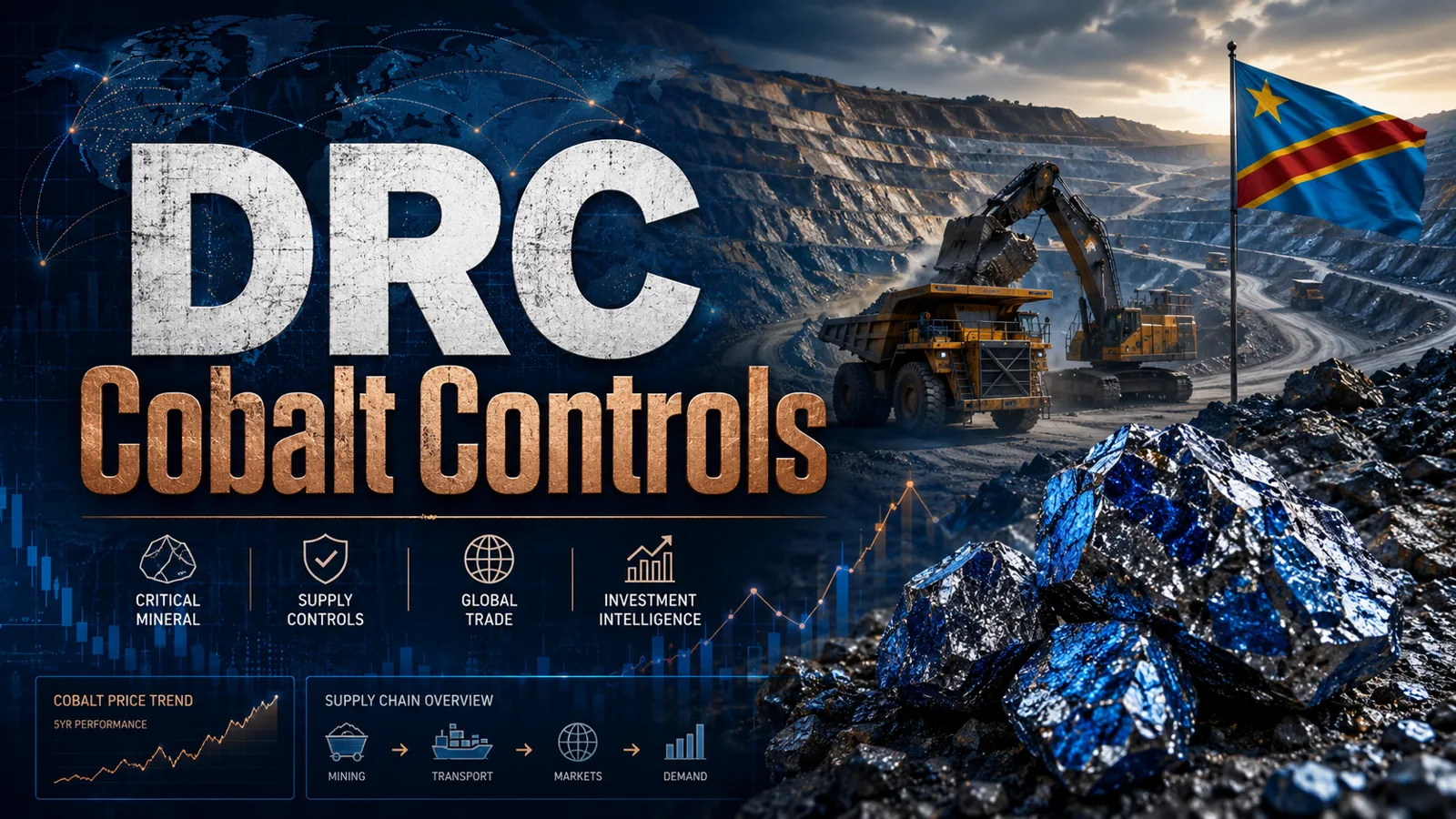
Recent reporting highlights how the DRC is using cobalt export controls and quota systems to strengthen its position in the global market, tighten supply and increase its leverage with Western partners. The country has moved from a full export ban toward a quota-based system, with export limits of 96,600 tonnes per year expected to continue shaping the global cobalt market through 2026 and 2027.
For investors, this creates both opportunity and risk.
The Opportunity
The opportunity is clear: DRC cobalt remains essential to the energy transition. The DRC supplies an estimated 70–72% of global mined cobalt — a mineral with no comparable alternative source at scale. As electric vehicle adoption accelerates, battery manufacturing scales, and AI data centres multiply, demand for cobalt is forecast to more than double by 2030. Investors, manufacturers, battery companies, traders and infrastructure partners will continue watching the DRC closely for years to come.
The government's shift from an outright export ban to a structured quota system signals something important: the DRC is not trying to exit the global cobalt market. It is trying to manage its position within it more strategically — tightening supply, influencing price, and leveraging its mineral dominance to attract better terms from Western governments and corporate buyers.
"DRC cobalt is not going away. The question is not whether to engage with the market — it is how to engage responsibly, legally and with proper verification."
The Risk
The risk is equally important to understand. The cobalt sector in the DRC operates within a complex regulatory, security and compliance environment that demands serious preparation before any capital commitment.
Export quota allocations are tightly managed by the government, and investors who do not understand how quotas are assigned, tracked and enforced risk entering commercial arrangements that have no legal export pathway. Ownership structures in DRC mining are frequently layered, involving state-owned entities, joint ventures, artisanal cooperatives and private operators — each with distinct legal obligations, environmental responsibilities and financial exposure.
The eastern provinces, where a significant share of artisanal cobalt originates, remain affected by conflict and security risk, with OECD Due Diligence guidelines requiring documented chain-of-custody verification for any cobalt moving through these zones. Investors who skip this step expose themselves to supply chain compliance failures in downstream markets — particularly in the EU, UK, and United States, where import regulations on conflict minerals are tightening.
What Investors Must Verify Before Committing Capital
Before committing capital to any DRC cobalt opportunity, investors should independently verify the following:
"Investors who move with legal due diligence, ESG awareness and reliable local partners will be better positioned than those who move quickly without verification."
Why This Matters for CongoConnect360
CongoConnect360 is positioned to support investors by connecting them with verified opportunities, responsible investment pathways and qualified legal partners across the DRC's mining, energy, agriculture and infrastructure sectors.
The platform does not replace lawyers, engineers or regulators. Its role is to create a more structured gateway between investors, project owners and professional due diligence providers — reducing the information asymmetry that makes DRC market entry unnecessarily difficult for international capital.
With the DRC gaining more global attention in cobalt and critical minerals, investors need a safer, more structured entry point into the market. That entry point must be based on information, verification and responsible partnership — not on informal introductions or rushed commercial commitments.
Investor Takeaway
The DRC cobalt market is not a simple opportunity. It is a strategic market that requires preparation, legal structure, compliance awareness and reliable local relationships.
The DRC supplies more than 70% of the world's cobalt. That position is irreplaceable and will not change in the near term. But accessing that opportunity responsibly — in a way that protects the investor, respects the regulatory environment, and creates genuine value — requires a level of preparation that many first-time DRC investors underestimate.
CongoConnect360 helps investors explore DRC cobalt and critical mineral opportunities with structure, intelligence and responsible investment readiness.
Frequently Asked Questions
What are DRC cobalt controls?+
DRC cobalt controls refer to export restrictions, quota systems and regulatory measures used by the Democratic Republic of Congo to manage cobalt supply and strengthen its position in the global critical minerals market.
Why is DRC cobalt important for investors?+
The DRC is one of the most strategic cobalt producers in the world. Cobalt is used in batteries, electric vehicles, energy storage and advanced technologies — and the DRC supplies 70–72% of global mined production with no comparable alternative source at scale.
How can investors reduce risk in DRC cobalt investment?+
Investors can reduce risk by conducting independent legal due diligence, verifying mining licences and export quotas, checking beneficial ownership, reviewing contracts, assessing ESG risks and working with qualified legal and technical partners on the ground.
How can CongoConnect360 help?+
CongoConnect360 helps by identifying verified opportunities, providing market intelligence, connecting investors with qualified local legal and technical partners, and supporting responsible investment across the DRC's critical minerals sector.
Explore DRC Mining Opportunities
CongoConnect360 maintains 100+ verified investment listings across mining, energy, agriculture, tourism, infrastructure and real estate in the DRC.