Real Estate in Kinshasa: Opportunities, Risks, and Market Realities
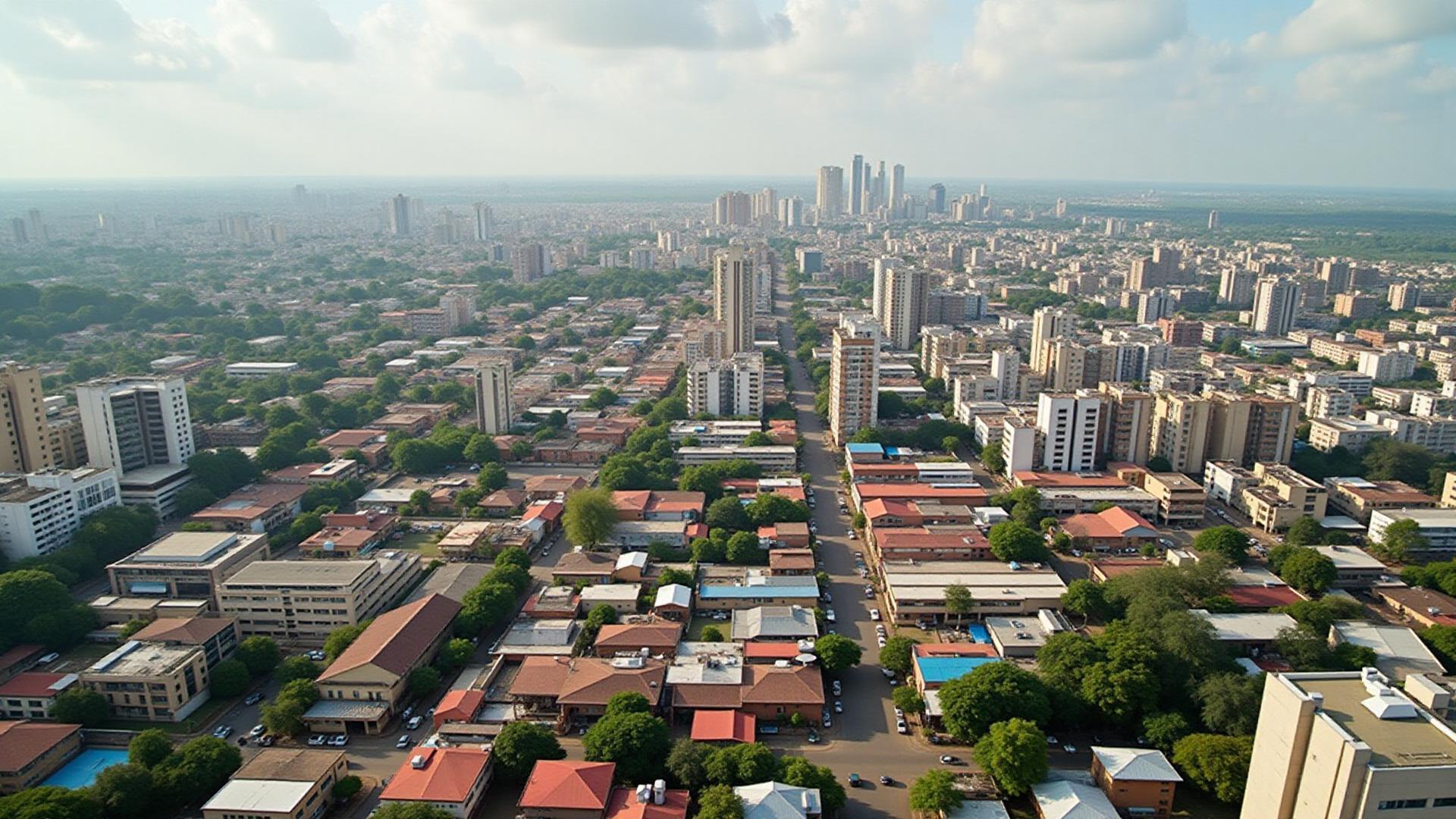
Kinshasa, a megacity of 17 million people growing at 4.1% annually, presents compelling real estate opportunities amid significant challenges. With GDP per capita rising to $680 (2024) and a burgeoning middle class of 2.3 million people, demand for quality housing, commercial space, and hospitality assets exceeds supply by 400%. This analysis provides honest assessment of opportunities, realistic risk evaluation, and actionable strategies for real estate investment in Congo's capital.
Market Fundamentals: Supply-Demand Imbalance
Housing deficit estimated at 3 million units with only 25,000 formal units added annually – 120-year timeline to close gap at current construction rates. Rental yields: Class A properties (Gombe, Ma Campagne) 7-9% gross yields, Class B properties (Lemba, Matongé) 10-12% yields, affordable housing 12-15% yields but higher management intensity. Price appreciation: Prime locations appreciated 8-12% annually (2019-2024) in USD terms, outpacing 5% sub-Saharan Africa average. Commercial real estate: Office space shortage with only 250,000 sqm Class A/B space available, Demand from NGOs, embassies, and mining companies requiring international standards (backup power, water, security), Rental rates $25-45/sqm/month for Grade A (Gombe), $15-25/sqm/month for Grade B. Real transaction data: 3-bedroom apartment Gombe neighborhood: Purchase $180,000-250,000, Monthly rent $1,800-2,500, Gross yield 8.4%, Operating expenses 25-30% (security, maintenance, management). Investment returns: Conservative scenario 12-15% IRR combining rental yield and capital appreciation, Optimistic scenario 18-22% IRR in prime locations with proper management.
Key Investment Segments and Strategies
Residential housing segments: (1) Luxury villas (Gombe, Ma Campagne): Target expatriates and senior executives, Price range $300,000-1,200,000, Rental $3,000-10,000/month, Cap rates 7-8%, Best for long-term hold and capital appreciation. (2) Middle-class apartments (Lemba, Ngaliema): Growing local professional class and returning diaspora, Price $80,000-180,000, Rental $800-1,800/month, Cap rates 10-11%, Higher tenant turnover but strong demand. (3) Affordable housing (Kimbanseke, Masina): Largest market segment with 3 million unit deficit, Price $25,000-50,000, Rental $250-500/month, Cap rates 12-15%, Requires volume/scale for profitability. Commercial opportunities: Office buildings: Mining sector tenants pay 12-month advances providing cash flow certainty, Long-term leases (3-5 years) vs 6-12 months residential, Tenant improvement allowances amortized over lease term. Retail centers: Only 8 modern shopping centers in city of 17 million, International retailers entering market (Shoprite, Game) seeking quality space, Rental structure: Base rent + percentage of sales (typically 3-5%). Hospitality sector: Business hotels (75-150 rooms) achieve 65-75% occupancy, ADR $150-250 for international brands, Development costs $150,000-200,000/room, Returns 15-18% IRR with proper management. Real example: Pullman Kinshasa Grand Hotel (270 rooms) achieved 72% occupancy, $180 ADR, generating $11.2M annual revenues.
Critical Risk Factors and Mitigation
Land title challenges: Only 15% of land has clear title documentation, Customary land rights overlap with formal registry creating disputes, Multiple claimants common requiring extensive verification. Risk mitigation: Conduct three independent title searches (land registry, local authorities, customary chiefs), Purchase title insurance if available (limited providers in DRC), Budget legal reserves 5-10% of purchase price for potential disputes, Engage local legal counsel with 10+ years Kinshasa experience. Construction quality and timelines: Local construction often substandard (poor concrete mix, inadequate reinforcement), Timeline overruns 40-60% common due to material supply chains, Cash-based payments to contractors create documentation challenges. Mitigation strategies: Hire international project managers with African experience, Fixed-price turnkey contracts with penalty clauses (0.1% daily, max 10%), Engage independent structural engineers for inspections, Escrow payment structures tied to verified milestones. Currency and repatriation risk: Congolese Franc depreciated 18% annually vs USD (2019-2024 average), Rental income in local currency while mortgages/returns expected in USD, Foreign exchange availability varies seasonally with mining exports. Currency hedging: Denominate leases in USD with local currency equivalent payment (all institutional tenants accept), Monthly rent collection and immediate conversion to USD, Natural hedge: Local operating expenses in CDF offset some currency exposure. Regulatory and tax compliance: Property tax (Impôt foncier) 1.5-3% of assessed value (often undervalued), Rental income tax 30% corporate rate or 22% individual progressive rate, Capital gains tax 10% on real estate sales, Withholding tax 20% on dividends/profit repatriation. Compliance strategy: Proper entity structuring through Mauritius/Netherlands holdings (15% treaty rate), Professional accounting maintaining documentation, Regular tax payments avoiding penalty exposure.
Infrastructure Constraints and Solutions
Electricity reliability: Grid power available <4 hours daily in most neighborhoods, Diesel generators required (operating cost $0.15-0.20/kWh), Solar+battery systems increasingly cost-competitive ($0.10-0.12/kWh levelized cost). Infrastructure investment requirements: Backup power systems (generator + fuel storage + solar): $15,000-40,000 per property, Water systems (borehole + treatment + storage): $8,000-15,000, Security systems (cameras, access control, guards): $5,000-12,000, Total infrastructure adds 15-25% to base construction/purchase costs. Water and sanitation: Municipal water unreliable in 85% of city, Private boreholes required (depth 40-80m, cost $8,000-12,000), Water quality testing and treatment essential (bacterial contamination common), Septic systems standard as sewer connections limited to central Gombe. Road access and transportation: Only 25% of roads paved with many in poor condition, Gombe peninsula has best infrastructure but limited development space, New developments in Kimwenza, Mongafula areas require private road construction, Budget $50-100/linear meter for basic road access. Impact on investment strategy: Focus on established neighborhoods with existing infrastructure (Gombe, Ngaliema, Ma Campagne), New development requires infrastructure bundling with multiple properties for cost efficiency, Premium pricing 30-40% higher in fully-serviced locations justifying infrastructure investments. Successful example: Cité du Fleuve development invested $120M in infrastructure (roads, water, power) supporting 2,500 residential units with premium pricing achieving 15% IRR despite infrastructure costs.
Legal Structure and Asset Protection
Optimal ownership structures: DRC SARL owning individual properties or portfolio with foreign holding company (Mauritius SARL or Netherlands BV) owning DRC entity. Benefits: Limited liability protection, Tax treaty advantages (15% vs 20% standard withholding), Easier transfer of ownership through share sales vs property transfer. Asset protection mechanisms: Multiple SPVs (Special Purpose Vehicles) for major assets isolating risks, Management agreements with professional property managers reducing operational exposure, Insurance coverage: Property all-risk, Third-party liability, Terrorism and political violence, Rental loss insurance. Property registration requirements: Notarized purchase agreement (Acte Authentique) from authorized notary, Land title transfer registration with Land Registry (Conservatoire des Titres Immobiliers), Tax clearance certificate proving all taxes paid, Registration fees 3-5% of transaction value. Due diligence essentials: Physical survey verifying boundaries match title documents, Neighbor confirmations avoiding boundary disputes, Environmental assessment for contamination (especially former industrial sites), Building permit and occupancy certificate verification, Utility connection agreements (water, electricity). Title insurance considerations: Limited availability in DRC (Crown Agents, specialized insurers), Coverage typically 70-80% of property value, Exclusions for known defects and government actions, Premium 1.5-2.5% of insured value (one-time cost), Claims process requires extensive documentation and 6-12 month resolution. Real-world example: $2.5M office building purchase in Gombe required: $75,000 legal due diligence (3 law firms), $15,000 technical inspections, $125,000 transfer fees and taxes, $50,000 title insurance, $265,000 total transaction costs (10.6% of price).
Property Management and Operations
Management intensity: Kinshasa real estate requires active management unlike passive Western investments, Tenant screening critical (require 3-6 month deposits, employment verification, guarantors), Maintenance demands higher due to climate, infrastructure challenges, power/water system wear. Professional management fees: Residential: 8-12% of gross rents for full service, Commercial: 6-8% of gross rents plus leasing commissions, Affordable housing: 12-15% due to higher tenant volume and collection intensity. Key management responsibilities: Rent collection and arrears management (collection rates 85-92% for Class A, 70-80% for affordable), Maintenance coordination (generator servicing, water treatment, security oversight), Tenant relations and conflict resolution, Regulatory compliance (licenses, tax filings, labor law), Financial reporting and owner distributions. Security considerations: Security guards required 24/7 (cost $600-1,200/month for residential property), Perimeter walls, electric fencing, and access controls standard, Tenant screening includes background checks through security firms, Emergency response plans for civil unrest or security incidents. Operational metrics and benchmarks: Operating expense ratios: 25-35% for Class A properties, 30-40% for Class B, 35-45% for affordable housing. Cost breakdown: Security 8-12%, Maintenance and repairs 7-10%, Management fees 8-12%, Utilities (common areas) 3-5%, Property taxes and insurance 2-4%, Reserve fund 5-8%. Net operating income: Class A properties 65-75% of gross rents, Class B properties 60-70%, Affordable housing 55-65%. Successful operators: Rawbank Immobilier manages 1,200+ residential units achieving 88% collection rates, Société Immobilière du Congo (SIMCO) operates 45,000 sqm commercial space, International developers (Maris, Eiffage) bring institutional-grade management raising industry standards.
Market Entry Strategies and Deal Sourcing
Entry approaches for foreign investors: (1) Turnkey acquisition: Purchase completed, tenanted properties minimizing construction and lease-up risk, Premium pricing 15-20% vs development but immediate cash flow, Focus on institutional owners (banks, mining companies) disposing assets. (2) Development partnership: Partner with local developer providing land/permits, Foreign investor provides capital and technical expertise, Typical structure: 60-70% foreign investor equity, 30-40% local partner, Returns 18-25% IRR for successful projects. (3) Distressed acquisition: Acquire incomplete developments from under-capitalized developers, Purchase at 40-60% of replacement cost, Requires construction expertise to complete, Higher risk but 25-35% IRR potential. Deal sourcing channels: Local real estate agents (commission 5-10% typically paid by seller), Direct approach to institutional owners (banks holding foreclosed properties), Mining company housing programs divesting non-core assets, Developer networks through chambers of commerce and industry associations. Due diligence timeline and costs: Phase 1 (Preliminary - 2 weeks): Site visit, title review, preliminary valuation ($5,000-8,000), Phase 2 (Detailed - 4-6 weeks): Legal review, technical inspection, financial analysis, market study ($15,000-30,000), Phase 3 (Final - 2-3 weeks): Contract negotiation, financing arrangement, transaction closing ($10,000-15,000), Total typical costs: 3-5% of transaction value for acquisitions, 1-2% for development partnerships. Financing considerations: Local bank financing limited (20-30% LTV maximum, 12-15% interest rates), International development finance institutions (DFC, IFC, AfDB) for large projects (>$10M), Seller financing occasionally available (30-40% down, 5-year terms, 8-10% rates), Most foreign investors use equity capital avoiding DRC debt market complexities.
Actionable Investment Framework
Recommended portfolio construction: Core holdings (50-60%): Established Class A properties in Gombe/Ma Campagne with institutional tenants, stable cash flow, and capital preservation focus. Value-add (30-40%): Class B properties requiring renovation or improved management, 3-5 year hold targeting 15-20% IRR. Opportunistic (10-20%): Development projects or distressed acquisitions, 5-7 year hold targeting 25%+ IRR. Investment criteria checklist: Location: Grade A areas (Gombe, Ma Campagne, Ngaliema) or emerging nodes with infrastructure, Title: Clear documentation with independent verification from three sources, Tenancy: Institutional tenants (mining companies, NGOs, embassies) with multi-year leases, Returns: Minimum 12% unlevered IRR, 18%+ levered IRR with conservative assumptions, Exit liquidity: Properties marketable to institutional buyers or local high-net-worth investors. Return expectations by segment: Luxury residential: 8-10% cash yield + 5-7% appreciation = 13-17% total return, Middle-class residential: 10-12% cash yield + 6-8% appreciation = 16-20% total return, Commercial office: 7-9% cash yield + 4-6% appreciation = 11-15% total return, Hospitality: 12-15% cash-on-cash returns with active management. Risk-adjusted portfolio targeting: 14-18% blended IRR, 9-11% cash yield, 5-7% annual appreciation. Minimum investment scale: $250,000-500,000 for individual property investment covering transaction costs and infrastructure requirements, $1-2 million for diversified portfolio (3-4 properties) spreading risks, $5 million+ for development projects requiring scale economics. Exit strategy planning: Hold period 5-10 years optimizing tax treatment and market cycles, Sale to institutional buyers (insurance companies, pension funds entering market), Local high-net-worth individuals repatriating diaspora capital, International buyers seeking African exposure. Get started: Download our "Kinshasa Real Estate Investment Guide" with neighborhood profiles, cost benchmarks, and financial templates. Schedule site visit and market tour with our local team. Access our curated deal pipeline with vetted opportunities meeting institutional criteria.
Kinshasa real estate offers compelling risk-adjusted returns (14-20% IRR) for investors willing to navigate frontier market complexities. Success requires realistic assessment of challenges including land title issues, infrastructure deficits, currency risk, and operational intensity. The market fundamentals are strong with 4% annual population growth, rising middle class, and 400% supply-demand gap. Winners will be investors who: conduct exhaustive due diligence, engage experienced local partners, budget properly for infrastructure and transaction costs, implement professional property management, maintain long-term investment horizons. With proper structuring and execution, Kinshasa real estate provides portfolio diversification, inflation protection, and attractive absolute returns. Ready to explore Kinshasa real estate opportunities? Contact our team for market tours, deal access, and end-to-end investment support.