
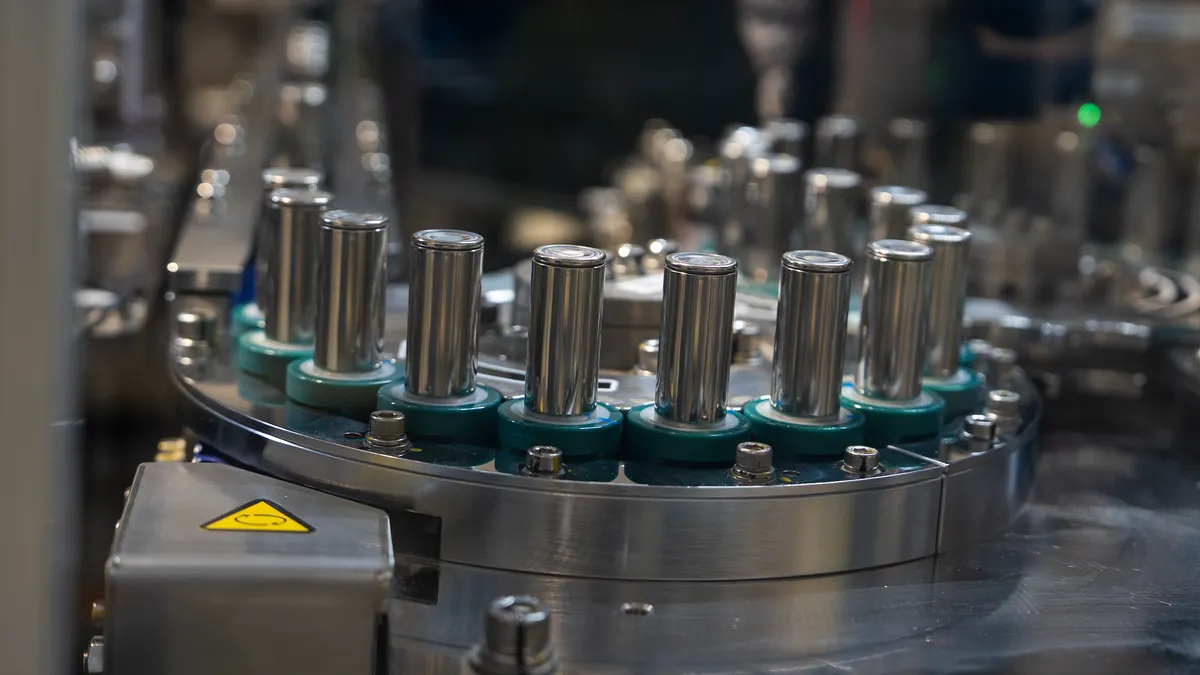
Every phone, wind turbine and electric vehicle begins in the ground. The same metals that make a low-carbon economy possible can also finance armed groups, expose children to dangerous work, pollute rivers and displace communities. "Responsible minerals" is the effort to close that gap: to keep the materials flowing while making supply chains transparent, accountable and compatible with human rights, community consent and environmental limits.
That agenda is no longer a niche compliance topic for jewellery houses and electronics brands. It now sits at the centre of energy security, industrial policy and climate strategy.
Battery cells leaving a factory look clean and precise. The raw materials behind them do not. Lithium, nickel, cobalt, graphite and copper are the backbone of electrification; the International Energy Agency's 2026 outlook still shows strong demand growth to 2040, with lithium rising more than threefold under stated policies and copper adding the largest volume of any metal.
The political question is no longer only whether those minerals will be mined. It is how, where, by whom, and under what rules.
What "responsible minerals" actually means
The phrase is broader than the older label "conflict minerals."
Conflict minerals usually means 3TG — tin, tantalum, tungsten and gold — the metals whose trade in the eastern Democratic Republic of Congo and other conflict-affected and high-risk areas (CAHRAs) became a global policy issue in the 2000s. Responsible minerals keep that core and extend it to:
- Battery and transition metals: cobalt, lithium, nickel, natural graphite, copper, manganese
- Magnet and electronics metals: rare earths, mica
- Recycled and secondary streams, not only newly mined ore
- Risks beyond armed conflict: child and forced labour, unsafe work, corruption, Indigenous rights, water, tailings, biodiversity and climate
The operational definition used by governments and large buyers is due diligence: a company must identify, prevent, mitigate and account for harms in its own operations and in its supply chain. The global reference text is the OECD Due Diligence Guidance for Responsible Supply Chains of Minerals from Conflict-Affected and High-Risk Areas.
That guidance is mineral-agnostic in principle. In practice, companies still treat 3TG, cobalt and battery materials as the first line of scrutiny — and too often treat everything else as optional.
Why the stakes rose with the energy transition
Clean-energy technologies are metal-intensive. A typical EV battery pack concentrates lithium, nickel, cobalt, manganese and graphite; grids and motors add copper and rare earth magnets. Demand is therefore rising even as chemistry shifts (for example, lithium-iron-phosphate batteries have slowed cobalt growth, but not eliminated it).
Three structural facts make responsible sourcing harder, not easier:
Concentration. Mining and especially refining of several critical minerals sit in a small number of countries. That creates both geopolitical risk and a governance problem: if midstream processing is concentrated, so is the ability to verify origin and labour conditions.
Long, opaque chains. Ore becomes concentrate, then metal, then chemical, then cathode, then cell, then pack, then vehicle. Each handoff is a chance to lose information. An IEA–OECD survey of companies in copper, lithium, nickel, cobalt, graphite and rare earths found that traceability is still uneven, costly and poorly interoperable across systems.
Land and people. A large share of future mines sit on or near Indigenous lands and rural communities. In the United States alone, a large fraction of nickel, lithium and cobalt resources lie within tens of miles of Native American reservations. Globally, more than half of mining projects tied to the energy transition are estimated to be on or near Indigenous lands.
The climate case for more mining is real. So is the justice case against mining that treats local people as an externality.
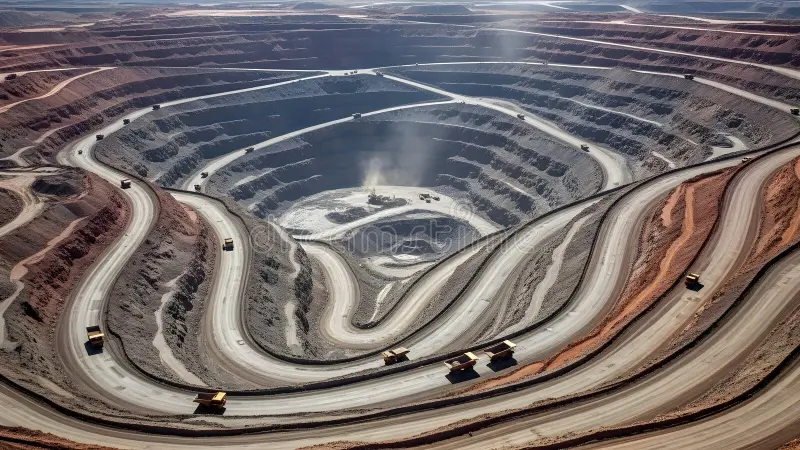
Industrial mines move mountains of rock. Without strong standards on tailings, water and closure, the environmental bill outlives the mine.
The harms that due diligence is meant to stop
Responsible-minerals programmes exist because the default market does not automatically price harm.
Human rights and conflict. Annex II of the OECD minerals guidance lists the "red flag" risks companies are expected to refuse or mitigate: serious human-rights abuses (including torture, forced labour, the worst forms of child labour, and sexual violence), direct or indirect support to non-state armed groups, abusive public or private security forces, bribery and misrepresentation of origin, money laundering, and failure to pay taxes and royalties.
Those risks are not historical. Gold smuggling from Central Africa still finances instability; weak governance of artisanal gold continues to drive conflict and capital flight. Watchdogs tracking "transition minerals" have documented repeated allegations of labour abuses, attacks on land defenders, and harm to Indigenous communities across cobalt, copper, lithium, nickel and rare earths.
Artisanal and small-scale mining (ASM). ASM is the world's largest mining workforce. Recent inventories put direct employment at roughly 45–50 million people in more than 80 countries, about a quarter of them women; gold alone accounts for a large share. ASM supplies on the order of one-fifth of newly mined gold and a meaningful slice of cobalt, tin and tantalum.
In the DRC, which produces the majority of the world's cobalt, artisanal output is commonly estimated at 15–30% of national production — enough to make DRC ASM the world's second-largest cobalt source after DRC industrial mines.
Cutting ASM out of supply chains can look like risk management on a spreadsheet. On the ground it can destroy livelihoods and push production into even less visible channels. The responsible response is formalisation, safer work, child-labour prevention and legal market access — not a boycott that pretends the miners will disappear.
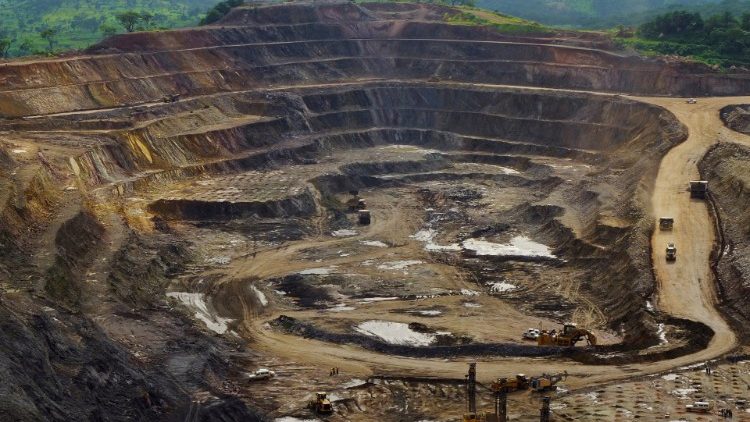
Artisanal miners are not a footnote. They are tens of millions of people whose work already feeds global jewellery, electronics and battery markets.
Environment. Mining's environmental footprint is not limited to carbon. It includes water use and contamination (especially in lithium brine regions and sulphide ore districts), tailings dam failure risk, deforestation, mercury use in artisanal gold, biodiversity loss and unreclaimed legacy sites. The OECD's Handbook on Environmental Due Diligence in Mineral Supply Chains was written precisely because conflict-focused programmes left environmental harm under-specified.
Communities and consent. Free, prior and informed consent (FPIC) for Indigenous Peoples is now a core expectation in leading mine-site standards and in G7 language on standards-based critical-minerals markets. Consultation that is late, cosmetic or conducted only with national elites is not consent.
The OECD five-step engine
Almost every serious regulation and industry scheme maps back to the same five steps:
- Build management systems. Publish a supply-chain policy aligned with OECD Annex II. Assign senior responsibility. Know your suppliers. Keep chain-of-custody data. Run a grievance mechanism.
- Identify and assess risk. Map the chain to the mine or at least to the smelter/refiner. Flag CAHRAs and other red flags. Investigate facts, not slogans.
- Respond. Report findings to senior management. Use leverage to improve conditions. Suspend or exit only for the most severe harms when mitigation is not possible.
- Independent audit. For upstream pinch points — smelters and refiners — third-party assessment is the market's main control.
- Report publicly. Annual disclosure is how downstream companies, regulators and civil society test whether due diligence is real.
Two design choices in the OECD model are often missed. First, disengagement is a last resort, not the default; walking away can worsen conditions for miners. Second, due diligence is ongoing, not a one-time questionnaire.
The later OECD six-step framework for responsible business conduct adds an explicit remediation step: when a company causes or contributes to harm, it should help put it right. That matters for communities living next to a tailings dam or a child removed from a mine who still needs schooling and income.
The rulebook: from conflict minerals to batteries and corporate duty
United States. Section 1502 of the Dodd-Frank Act (2010) required listed companies to investigate and report on 3TG from the DRC and adjoining countries. It did not ban those minerals. It forced visibility. The downstream effect was the rise of smelter audit programmes and the Conflict Minerals Reporting Template (CMRT).
European Union — Conflict Minerals Regulation (EU 2017/821). Since 1 January 2021, EU importers of 3TG above volume thresholds must apply the OECD five steps. The law aims at roughly 600–1,000 importers and, indirectly, about 500 smelters and refiners worldwide. In October 2025 the Commission recognised the Responsible Minerals Initiative's Responsible Minerals Assurance Process (RMAP) as equivalent — the first scheme recognised under the regulation — so importers can rely on RMAP-conformant facilities. The Commission also launched ReMIS, a transparency platform for due-diligence policies.
EU Batteries Regulation (2023/1542). This is the bridge from 3TG to the energy transition. It requires due diligence on lithium, cobalt, nickel and natural graphite in batteries, plus recycled-content targets, carbon-footprint disclosure and collection/recycling rules. It is one of the first major laws to treat battery minerals as a human-rights and circularity problem at the same time.
EU Corporate Sustainability Due Diligence Directive (CSDDD, 2024) and Critical Raw Materials Act (2024). CSDDD pushes human-rights and environmental due diligence across large companies' chains of activities, including raw-material extraction. The Critical Raw Materials Act adds security-of-supply tools — strategic projects, stockpiles, risk assessments — while stating that sustainability and circularity are part of resilience, not a rival goal.
National laws. France's Duty of Vigilance law, Germany's Supply Chain Act (LkSG) and similar statutes already force many manufacturers to look upstream of the smelter.
G7 and standards-based markets. After the 2025 Kananaskis summit, G7 ministers were tasked with a roadmap for standards-based critical-minerals markets. The Canadian follow-through text lists, at minimum, international labour and human-rights standards, meaningful engagement and FPIC, OECD due diligence in CAHRAs, and anti-bribery rules. That is an attempt to stop a race to the bottom in which "friend-shoring" ignores how the ore was produced.
Who actually checks the chain
Regulation sets the expectation. Assurance systems do the day-to-day work.
Responsible Minerals Initiative (RMI). Founded in 2008 under the Responsible Business Alliance, RMI now has more than 500 member companies. It does not certify mines or bags of ore. It assesses smelters, refiners and processors — the chokepoints where many supply chains become identifiable. Tools include RMAP standards for tin, tantalum, tungsten and gold; cobalt refiner standards; an All Minerals standard; the CMRT; and the Extended Minerals Reporting Template (EMRT), expanded in 2025 to cobalt, mica, copper, natural graphite, lithium and nickel. The All Minerals standard has also gained full recognition from the London Metal Exchange, which matters because LME-traded metal is a reference point for nickel, tin, cobalt and other industrial metals.
Initiative for Responsible Mining Assurance (IRMA). If RMI is strongest at the refiner, IRMA is strongest at the mine gate. It is the leading multi-stakeholder standard for industrial mine sites, equally governed by companies, purchasers, labour, communities and NGOs. The standard covers 26 chapters and 400-plus requirements across business integrity, social responsibility, environment and planning for positive legacies. Achievement is scored (Transparency, 50, 75, 100), not pass/fail, and audit reports are public. As of late 2025 IRMA reported 105 companies and 127 sites engaged across dozens of countries, with particularly fast uptake in lithium.
Other pieces of the mosaic. The Copper Mark and joint due-diligence standards for base metals; Fairmined and Fairtrade for artisanal gold; CRAFT and planetGOLD criteria for mercury-free, rights-respecting artisanal gold; ICMM Mining Principles for member companies; Responsible Jewellery Council for jewellery; Fair Cobalt Alliance for DRC ASM cobalt. Alignment assessments by the OECD try to stop this from becoming a thicket of incompatible logos.
The honest limitation: a conformant smelter is not proof that every mine feeding it is clean. Chain-of-custody systems and mine-site audits have to meet in the middle.
Traceability: necessary, not sufficient
Policymakers now treat traceability as a security tool as well as an ethics tool. If you cannot say where a tonne of lithium or cobalt came from, you cannot diversify, sanction, recycle or remediate with any precision.
Useful approaches include:
- Mass balance and chain of custody from mine to refiner
- Digital product passports (especially under EU battery rules)
- Common reporting templates (CMRT/EMRT) so suppliers are not answering 200 different customer surveys
- Interoperable data standards, which the IEA and OECD flag as a current bottleneck
- Recycling and urban mining, which shorten the chain and cut some extraction risk — provided scrap itself is not a dumping ground for undocumented material
Blockchain and tagging help only when the first entry is true. A QR code on a bag of concentrate cannot fix a fraudulent origin declaration. Technology without independent checks is expensive theatre.
Inclusion of artisanal miners is a test of seriousness
Responsible sourcing that only buys from large industrial mines will miss a fifth of the gold market and a material share of cobalt, tin and tantalum. It will also miss the development opportunity.
What works in practice is unglamorous: legal ASM zones, cooperatives, mercury-free processing, child-labour monitoring tied to schools and household income, offtake agreements with traders who pay a living price, and due-diligence schemes that are designed for small operators rather than copied from multinational audit manuals. Organisations such as Pact, planetGOLD and the Fair Cobalt Alliance have spent years showing that formalisation is possible when governments, buyers and local associations stay in the same room.
The alternative — informal production feeding informal exporters feeding refiners that claim not to know — is how conflict gold and child-mined cobalt keep reaching "clean" markets.
Circularity is responsible sourcing by another name
The most responsible tonne of metal is often the one that is not newly mined. The EU Batteries Regulation's recycled-content targets for cobalt, lithium, nickel and lead are an attempt to hard-wire that idea into product design. Better collection of e-waste, design for disassembly, and substitution (where chemistry allows) all reduce pressure on the most fragile mining districts.
Circularity is not a full substitute. Even aggressive recycling cannot meet near-term demand growth for lithium and copper. It can, however, change the mix of risk and give producing countries a reason to capture more value in refining and recycling rather than only in raw ore.
What different actors should actually do
Companies (miners to brands). Publish an OECD-aligned policy that covers more than 3TG. Map to the refiner as a minimum and to the mine where risk is high. Use RMAP, IRMA, Copper Mark or equivalent — and read the audit reports, not just the logo. Keep ASM in the chain under controlled conditions instead of driving it underground. Budget for remedy, not only for questionnaires. Align purchasing, legal and sustainability teams so that the cheapest tonne does not automatically win.
Governments in consuming countries. Harmonise due-diligence laws so suppliers face one coherent expectation. Recognise credible schemes without outsourcing all judgement to them. Use trade, finance and offtake agreements to reward mines that meet high social and environmental performance. Fund traceability public goods and ASM formalisation, not only new industrial mines.
Governments in producing countries. Secure land rights and FPIC. Collect taxes and royalties transparently. Regulate tailings and water as if the next dam failure will be political as well as physical. Create legal pathways for ASM. Enforce labour law at industrial sites instead of treating FDI as a reason to look away.
Investors and lenders. Treat human-rights and tailings risk as credit risk. Require mine-site disclosure (IRMA-style public reports beat glossy ESG pages). Price in closure and community liabilities.
Citizens and buyers. The consumer's leverage is limited but not zero: keep phones and vehicles longer, repair them, and prefer companies that publish smelter lists and mine-site assessments. Responsible minerals will not be delivered by individual virtue. They will be delivered by rules, audits and purchasing contracts. Public attention is what keeps those contracts from going slack.
The standard of success
A responsible minerals system is working when three things are true at once.
First, armed groups and abusive operators cannot easily sell into legal markets. Second, communities and workers can refuse a project, shape it, or obtain remedy when harm occurs. Third, the energy transition still gets the copper, lithium and rare earths it needs, increasingly from recycled streams and from mines that can show their work.
Transparency is the means. The end is more demanding: supply chains that do not purchase silence from the people who live on top of the ore. That is a higher bar than conflict-free paperwork. It is also the only bar that matches the moral claim of a "just transition."
The minerals will be mined. The open question is whether the next decade of extraction repeats the last century's pattern — or whether the rules now on the books are enforced with enough honesty to make "responsible" mean something at the pit wall, not only in a sustainability report.
Work with CC360 Global Advocacy
We convene investors, institutions and Congolese partners around responsible, transparent and sovereign resource development.