To: policymakers, regulators, buyers, financiers, Congolese institutions and diaspora partners.
Subject: How due diligence, traceability and local value creation must be designed together if Congo's minerals are to serve peace and prosperity rather than paperwork and flight.
Executive summary
Responsible mineral supply chains are no longer a niche compliance file. They sit at the junction of three facts. First, the Democratic Republic of Congo supplies a decisive share of the cobalt, a rising share of the copper, and a strategically important share of the tantalum, tin, tungsten and gold that the energy transition and electronics industries require. Second, international rules — OECD minerals guidance, the EU Conflict Minerals Regulation, the EU Batteries Regulation, expanding corporate due diligence laws, US conflict-minerals disclosure, ICGLR certification and industry schemes such as RMAP — now treat "responsible sourcing" as a condition of market access. Third, those rules have been better at producing smelter lists and country-of-origin inquiries than at producing Congolese processing capacity, safer artisanal livelihoods, or a smaller war economy in the east.
This brief argues that responsible supply chains fail if they only police risk on the way out of the country. A chain that is "clean" on a spreadsheet and empty of Congolese value is not a development policy. A chain that captures value but ignores armed groups, child labour, sexual violence and environmental harm is not responsible. The workable agenda is both: due diligence that stays engaged in high-risk areas, plus industrial and fiscal policy that keeps more of the chain on Congolese soil.
OECD work in 2025–26 is explicit on the first half of that sentence: standards encourage responsible engagement in conflict-affected areas, not blanket avoidance. Avoidance does not empty Great Lakes tantalum from world markets; it concentrates refining elsewhere and leaves Congolese communities with fewer formal buyers. The second half is a Congolese political choice now visible in concentrate-export restrictions, the E-trace platform, ASM formalisation, critical-minerals strategy and smelter investments. Those tools will only work if foreign buyers treat local processing as a diligence asset rather than a disruption.
Headline recommendations
- Treat OECD five-step due diligence as the common language — and require it for battery metals, not only 3TG.
- Design traceability to include artisanal copper-cobalt, which is still largely untracked at scale, unlike 3T chains.
- Ban de facto embargoes of Congolese material that is under a credible mitigation plan.
- Tie market access and offtake to measurable local value: anodes, sulphates, precursors, skills, community levies actually paid.
- Put women's safety, child-labour alternatives and ASM formalisation inside the same contracts as origin data.
- Make ICGLR, E-trace, RMAP and battery-passport systems interoperable instead of multiplying parallel audits.
1. Why this brief, and why now
For fifteen years "responsible minerals" meant 3TG from the eastern DRC and the Dodd-Frank / OECD response to armed-group finance. That file is unfinished. It has also been overtaken. The minerals that now move markets — cobalt and copper from Lualaba and Haut-Katanga, lithium in prospect at Manono, the same 3TG still flowing under pressure in the Kivus — sit inside battery regulation, critical-raw-materials diplomacy, and peace talks that treat corridors and offtake as security instruments.
The policy problem is therefore larger than a conflict-minerals checkbox:
- Integrity of origin. Can a buyer show mine, trader, processor and export without gaps that hide taxation by armed actors or mixing of informal feed?
- Integrity of impact. Does the same chain respect labour, communities, water, tailings and women's security?
- Integrity of value. Does Congo capture more than a royalty on a concentrate bag?
If international policy answers only the first question, companies will keep publishing conformant-smelter counts while Congolese public debate asks why the country remains poor in a minerals boom. If Kinshasa answers only the third question — export bans without power, labs and offtake — material will leak, prices will distort, and diligence systems will treat Congolese supply as unmanageable. Responsible development is the refusal of that split.
2. The standard that already exists — and what it does not do
2.1 OECD as the spine
The OECD Due Diligence Guidance for Responsible Supply Chains of Minerals from Conflict-Affected and High-Risk Areas remains the reference text. It is not a DRC-only rule and, since the third edition, is not a 3TG-only rule. It applies to all minerals from CAHRAs. Its logic is a five-step cycle: strong company management systems; identify and assess risks; design and implement a strategy to respond; independent third-party audit of smelters/refiners; public reporting. Annex II lists the red flags that still matter: direct or indirect support to non-state armed groups; abusive public or private security; worst forms of child labour; forced labour; widespread sexual violence; bribery and fraudulent misrepresentation of origin.
Two features of the Guidance are routinely ignored in political debate.
It is a mitigation standard, not an origin ban. Companies are expected to engage, improve, and disengage only when mitigation fails. That is why OECD "due diligence essentials" material in 2025–26 stresses that responsible engagement is associated with more diversified, resilient supply, whereas avoidance leaves Great Lakes material in the system without the leverage of formal buyers.
It is a process, not a certificate. A CMRT filed on time is step one and two, not the whole duty. Downstream firms that stop at smelter lists have not assessed conditions at the pit, the depot, or the crossing.
An EU–OECD Due Diligence Checker for the minerals sector, launched in December 2025, now lets firms gap-analyse themselves against a six-step framing of the same standard. Tools are proliferating. Practice at mine gates is not keeping pace.
2.2 The layered European regime
Europe is the jurisdiction that has gone furthest from voluntary guidance to law, and Congolese exporters will feel that stack whether or not they sell a finished battery.
- Regulation (EU) 2017/821 (Conflict Minerals) — covers Union importers of tin, tantalum, tungsten and gold above thresholds; requires an OECD five-step system and feeds the CAHRA lists used by other laws.
- Regulation (EU) 2023/1542 (Batteries) — covers operators placing batteries on the EU market (turnover threshold applies); due diligence on cobalt, lithium, nickel, natural graphite and compounds; third-party verification; Commission guidelines due by 26 July 2026; obligations apply from 18 August 2027 (deferred from 2025).
- CSDDD (as revised by simplification) — general human-rights and environment diligence across value chains for large companies; more specific minerals rules prevail where they bite harder.
- Critical Raw Materials Act — strategic projects, offtake, recycling; partnerships and "standards-based markets," not a substitute for site diligence.
The Batteries Regulation is the hinge. It does not replace 2017/821. It extends a comparable duty to the metals the energy transition actually consumes. Annex X risks and OECD alignment mean a cathode plant in Poland will need more than a trader's invoice from Kolwezi. Commission guidelines in 2026 will decide how demanding that is in practice. Congolese policy should be written into those guidelines — mine-of-origin, consolidation points, taxes paid — rather than discovered as a surprise in 2027.
G7 language on "standards-based markets" for critical minerals (Kananaskis 2025 roadmap work) points the same way: labour and human-rights standards, FPIC where it applies, OECD CAHRA diligence, anti-bribery, environmental externalities. Producer countries that can show performance against those criteria will be easier to finance. Countries that can only show reserve numbers will not.
2.3 United States disclosure and industry schemes
US issuers still file conflict-minerals reports under Dodd-Frank Section 1502. The operational machine is the Responsible Minerals Initiative: CMRT/EMRT templates, RMAP smelter audits, cross-recognition with LBMA, RJC and tin protocols. Large buyers report high "quality response" rates and hundreds of conformant smelters. That architecture reduced the worst opacity in 3TG refining. It did not, by itself, formalise Congolese ASM copper-cobalt or stop eastern gold and coltan from funding armed actors when state control collapses. Downstream comfort and upstream reality can diverge for years.
2.4 The regional layer: ICGLR
The ICGLR Regional Certification Mechanism is the Great Lakes' own answer: mine-site inspection (green / yellow / red), chain-of-custody documents, export certificates, member-state databases, an Independent Mineral Chain Auditor. Designated minerals remain 3TG. The mechanism is only as strong as inspections that actually happen and databases that actually talk to each other when material crosses a border. It is the right regional public good. It is not yet a substitute for battery-metal traceability in the Copperbelt.

3. The Congolese evidence: two supply systems, not one
Policy fails when it treats "DRC minerals" as a single chain.
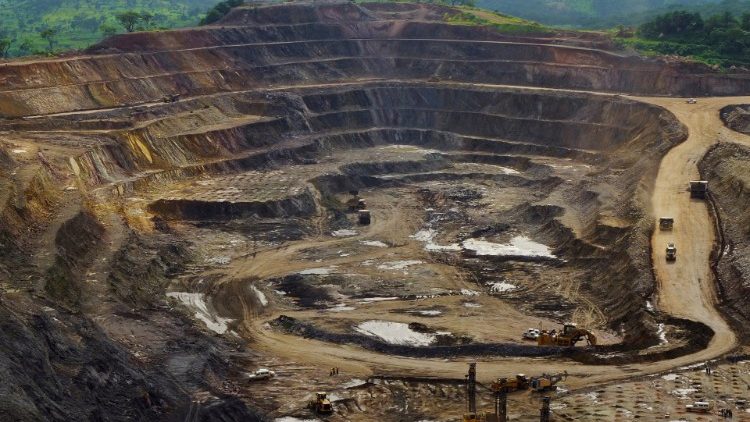
Industrial copper-cobalt in Haut-Katanga and Lualaba is large-scale, capital-intensive, increasingly smelted on site (notably Kamoa-Kakula's anode smelter), and already inside OECD-style buyer programmes. Risks here are environmental (tailings, water, air), labour and community, local-content evasion, and mixing of undocumented artisanal feed into industrial streams.
Artisanal copper-cobalt is a livelihood system. BGR–Ministry of Mines mapping in 2025 visited 90 sites in the two Copperbelt provinces; about 112,000 artisanal miners in 71 cooperatives were associated with the activity in that study's framing. Women remain a large share of washing, transport and trading. Traceability is the gap: unlike 3T chains, artisanal Cu-Co is not tracked at scale; mixing with industrial output is often undocumented at export. EITI's 2025 thematic work on ASM copper-cobalt likewise flags a slide toward semi-industrial methods, weak control points, misreporting and unreliable production and revenue data.
Eastern 3TG and gold remain the conflict file. ICGLR certificates, iTSCi-type tagging and RMAP cannot outrun a change of who taxes the pit. Responsible policy here is inseparable from peace policy: certified bags from a site under a new armed administration are a governance problem, not a logistics problem.
Kinshasa has moved several levers at once:
- Designated Minerals Certification regulations that write OECD-style diligence, payment publication and a documented path from pit to export into national procedure.
- E-trace, announced by the certification agency as a digital journey from mine to export.
- Critical minerals strategy (early 2026) built on exploration, local processing, skills and ESG.
- ASM formalisation: SAEMAPE reinforcement, artisanal zones (dozens identified in Lualaba and Haut-Katanga; Kasulu operational), compulsory accident cover for cooperative members, EGC–trader arrangements for artisanal cobalt, gold-traceability programmes.
- Export policy on concentrates, used to force processing — with ministerial waivers possible in "strategic" cases.
- US–DRC strategic partnership language that explicitly links responsible mining, ASM formalisation, illicit-trade reduction and alternative livelihoods.
These are the right instruments. The policy brief's warning is implementation capacity: inspections that cannot reach 15 of 90 mapped sites; cooperatives that exist on paper; mixing that is invisible at the border; and a cobalt quota/ban cycle that can starve formal plants if it is not paired with offtake and power.
4. The design error: diligence without development
A responsible chain that stops at "conflict-free concentrate" locks in the colonial price structure with better software.
Value in battery and electronics chains is steep. Concentrate and even hydroxide capture a fraction of what precursor, cathode and cells capture. A policy that spends political capital only on origin audits subsidises the profitable steps that sit in China, Korea, Europe and North America. Congolese industrialisation — smelters, hydromet plants, precursor zones such as Musompo, cable and foil plants — is therefore not a separate "economic sovereignty" essay. It is how responsible supply chains become Congolese supply chains.
There is a diligence case for that shift, not only a nationalist one:
- Shorter chains are easier to audit. Anode poured next to the concentrator has fewer depot hand-offs than a bag trucked through three countries.
- On-site processing can cut some transport emissions that battery passports will eventually count.
- Formal plants create a counterpart that can be named in a CMRT, visited, and held to IFC-type emissions and labour standards — which a shifting artisanal pile cannot.
- Local content and community levies become observable when there is a factory gate, not only a pit.
The condition is honesty about energy and skills. A precursor plant without megawatts is a press release. A smelter staffed only by fly-in technicians is not technology transfer. Responsible value creation means power, training, environmental controls and offtake written into the same package as the traceability ID.
5. Specific risks current policy still under-prices
De-risking by exit. If Batteries Regulation liability feels cheaper to manage by dropping Congolese ASM cobalt than by financing formalisation, women washers and cooperative miners will lose the only formal buyer and sell into the opaque channel the regulation was meant to shrink. OECD already warns against that reflex. EU guidelines in 2026 should say so in operational language: mitigation plans, not origin bans.
Audit fatigue and scheme shopping. RMAP, ICGLR, IRMA, battery due-diligence notified bodies, national E-trace, customer-specific protocols — each has a fee and a questionnaire. Multiplicity without mutual recognition taxes compliant operators and leaves the non-compliant untouched.
Mixing as the master loophole. Undocumented ASM feed into industrial Cu-Co exports is the Copperbelt equivalent of a yellow-flagged 3T site. Until mass-balance or segregated-stream rules are enforced at plants and at OCC/CEEC, "industrial origin" is a claim, not a finding.
Gender-blind diligence. A chain can be child-labour "closed" on the day of a visit and still run on unpaid female washing labour, no toilets, and no redress for assault. That is an Annex II problem even when no armed group is on site.
Peace processes that trade minerals without diligence. Regional economic frameworks and corridor diplomacy will fail their own security purpose if they create new official routes for unofficial taxation. Responsible minerals policy is a peace instrument only if certificates follow control of the ground.
Export bans without a processing queue. Forcing value addition is legitimate. Doing it faster than plants, reagents and power exist recreates smuggling, which is the enemy of every traceability system.
6. Policy positions — what "responsible development" should mean in practice
6.1 For the Government of the DRC
- One national diligence spine. Align Mining Code implementing texts, Designated Minerals Certification, E-trace, CEEC/OCC certificates and SAEMAPE site cards on the OECD five steps and Annex II. Publish a single data dictionary so a buyer is not asked for five incompatible origin stories.
- Close the Cu-Co traceability hole. Extend chain-of-custody discipline from 3T to artisanal copper and cobalt: cooperative ID, depot weighbridge, plant mass-balance, export dossier. Fund the follow-up mapping that BGR and the ministry already planned toward depots and processors.
- Formalise ASM as a market, not a raid. Viable ZEAs, price transparency at buying counters, accident insurance that pays, and a public list of cooperatives that pass inspection. EGC and similar offtakers only work if they pay a living differential over the informal trader.
- Pair processing mandates with enabling conditions. Concentrate-export limits should automatically review power availability, reagent logistics and offtake. Waivers should be time-bound and published.
- Make mixing a sanctionable offence at industrial plants, with published mass-balance summaries in EITI.
- Gender and child-labour metrics in every site inspection, not a parallel NGO annex. Alternative livelihoods for households, not only school enrolment drives.
- Use Gécamines equity tonnes as a transparency lever. State trading that publishes prices and counterparties is diligence infrastructure, not only revenue optimisation.
6.2 For the European Union and member states
- Write engagement, not avoidance, into Batteries Regulation guidelines (due 2026). Specify what a credible ASM-cobalt mitigation plan looks like so operators cannot treat "DRC" as a red flag of origin rather than a set of site-level risks.
- Recognise interoperable upstream systems (ICGLR + E-trace + RMAP + IRMA) to cut duplicate audits for 2027 battery diligence.
- Fund the public goods that private audits will not pay for: SAEMAPE transport, labs, women's protection services near sites, school-and-income packages in cobalt territories.
- Make partnerships under CRMA and Global Gateway conditional on processing and skills, not only on tonnes to European ports. A corridor that only evacuates concentrate is a more efficient extractive model, not a responsible one.
- Keep CSDDD and minerals rules coherent so firms cannot claim compliance with the general duty while ignoring Annex II red flags on a named Congolese supplier.
6.3 For the United States and other offtake partners
Partnership language on ASM formalisation, illicit-trade reduction and alternative livelihoods should appear in financing term sheets, not only communiqués: pilot formal sites, traceable counters, technical assistance that is actually disbursed. Section 1502 reporting should increasingly ask what downstream firms did in Covered Countries, not only whether their smelters were conformant.
6.4 For companies and financiers
- Stay on the ground. OECD expects mitigation. Long-term offtake with cooperatives and industrial plants under improvement plans beats a silent exit.
- Pay for origin quality. A formal bag will not beat a smuggled bag on price unless the premium is real.
- Integrate EHS and human rights with 3TG/cobalt templates. An RMAP-conformant smelter fed by a site with no slope support is not a responsible chain.
- Local content as diligence evidence. Named Congolese suppliers, trainees in technical grades, and community levy receipts belong in the same report as the CMRT.
- No mixing without disclosure. If industrial plants take ASM feed, say so and put it in a controlled stream.
6.5 For Congolese civil society, business and diaspora (CC360's own lane)
- Insist that "responsible" include who captures the margin, not only who signed the audit.
- Translate EU 2027 battery duties into French/Lingala/Swahili toolkits for cooperatives and SMEs before the deadline, not after the first rejected shipment.
- Put women miners' organisations and youth entrepreneurs in rooms where schemes are designed.
- Treat diaspora skills (metallurgy, audit, trade law) as a diligence resource: returnships into labs and certification agencies.

7. A simple test for any new rule or deal
Before endorsing a regulation, an offtake, a corridor or a campaign, ask five questions:
- Can a Congolese cooperative or plant comply without a Brussels law firm?
- Does the rule reward mitigation in CAHRAs or reward leaving?
- Does it see artisanal copper-cobalt, or only 3TG?
- Does it move a processing step or a skill onto Congolese soil within a dated window?
- Does it make a woman on a wash line safer and a child less necessary to household income?
If the answer to (1)–(3) is weak, the instrument is theatre. If (4)–(5) are absent, it is compliance without development.
8. Conclusion
The world has spent a decade and a half building a language for responsible mineral trade: OECD steps, Annex II red flags, smelter audits, regional certificates, soon battery due-diligence files. That language is necessary. It is not sufficient.
Congo does not need another isolated standard. It needs a supply-chain policy that treats peace, human rights, traceability and value creation as one system. Formalise the pits that can be formalised. Track the bags that still are not. Smelt and refine where power and skills can be built. Keep buyers in the market while sites improve. Refuse both the embargo that impoverishes and the "clean concentrate" model that leaves the factory somewhere else.
CC360 Global Advocacy's position is straightforward. The world may need Congo's resources. A responsible chain is one in which Congo also needs that chain — because it employs its people, funds its peace and keeps a growing share of the value those resources create.
This brief is intended to support constructive international dialogue. It does not replace legal advice on any single regulation. CC360 Global Advocacy welcomes evidence, correction and partnership from institutions working on the same problems.
Work with CC360 Global Advocacy
We convene investors, institutions and Congolese partners around responsible, transparent and sovereign resource development.