
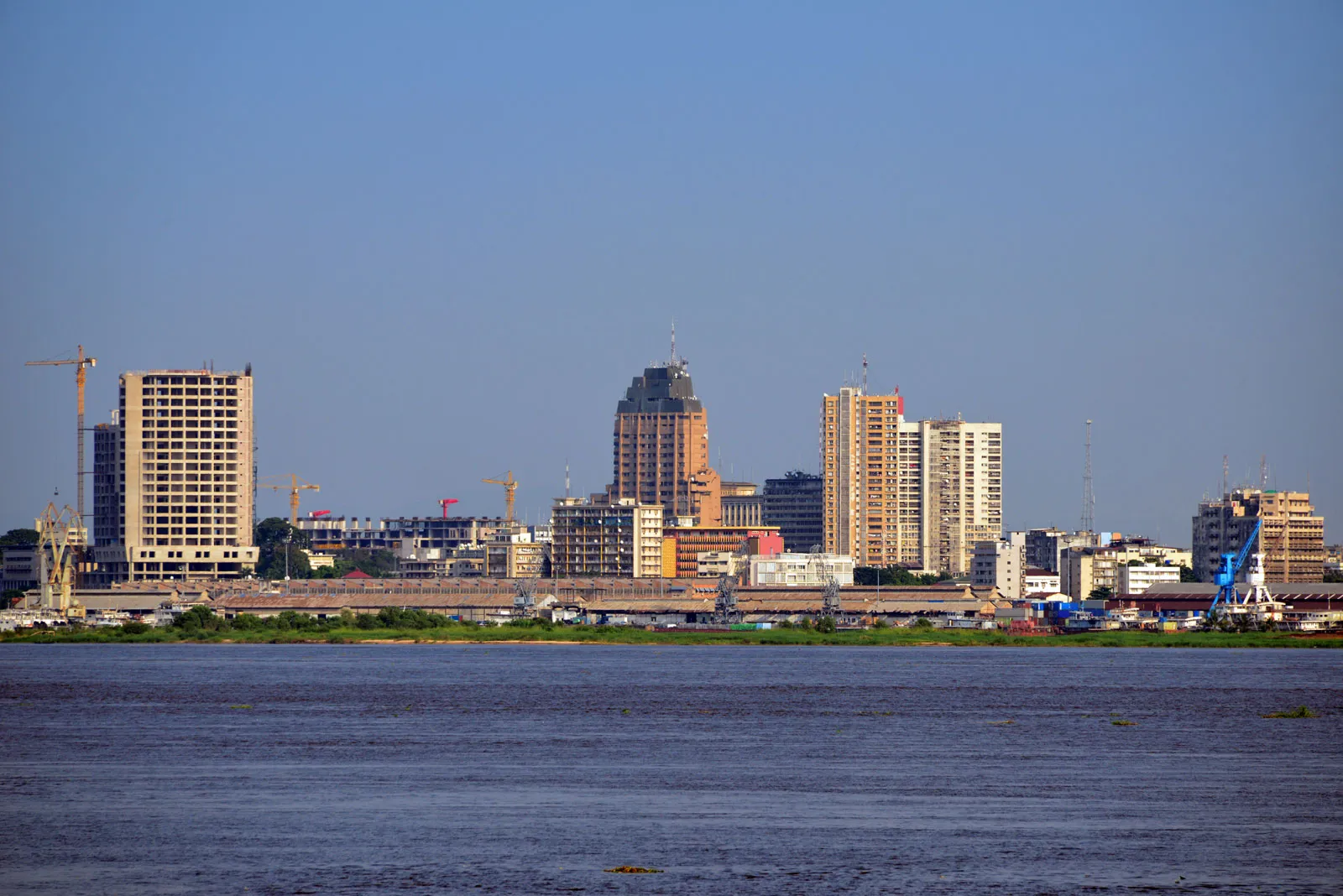
Congo's development will not be decided only in mining codes, peace communiqués or smelter commissioning reports. It will be decided by whether women who wash ore can own a cooperative, whether a 19-year-old in Mbuji-Mayi can learn a trade that pays, whether a small firm in Goma can sell to more than one customer, and whether a Congolese engineer in Brussels can invest without navigating a maze.
People and inclusion is the demand that those groups stop being "beneficiaries" of someone else's project and become authors of the country's productive life.
The numbers make the case before any manifesto does. About two-thirds of Congolese are under 25. Some 22 million people were aged 15–24 in 2025; by 2030 that cohort will be closer to 26 million. Women are roughly 62 percent of the labour force, yet they hold a thin slice of wage jobs, land titles, mining licences and board seats. The diaspora is commonly estimated at 6–8 million people and sends on the order of $1.8–2.1 billion a year — a social safety net and, if organised, a source of capital and skill.
A country that cannot offer those people a real part in its boom will export them, exploit them, or lose them to the informal pit.
Most Congolese livelihoods are already entrepreneurial: a stall, a plot, a phone, a bag of ore. Inclusion means those activities can grow, borrow, hire and be safe — not that they must wait for a factory that never opens.
Women: present in the work, absent from the power
Women are not at the margin of Congo's mineral economy. They are inside it, in the worst-paid rooms.
Official mining employment statistics put women at about 13 percent of the recorded workforce. In artisanal and small-scale mining the picture flips: women are often 40–50 percent of the people who live from the pits, as washers, transporters, crushers, traders, cooks and, in too many sites, as people exposed to sexual violence. They are under-represented in digging crews that capture the higher margin, in cooperatives that hold the licence, and in the offices that negotiate offtake. UNCTAD has noted that fewer than 1 percent of government and policy decision-makers are women — a statistic that helps explain why mining policy still treats female miners as a social appendix.
The Mining Code's ban on pregnant women in artisanal exploitation is framed as protection. On sites without childcare, paid leave or alternative income, protection can mean expulsion from the only cash in the household. Conflict makes the bargain crueler. After M23's expansion in the Kivus, field networks documented a sharper militarisation of artisanal sites and a rise in the risks women already carried: predation, exclusion from male-dominated cooperatives, informal work with no redress. Reports of sexual violence in the east in early 2025 reached levels that should have stopped every "critical minerals" conversation until protection was operational.
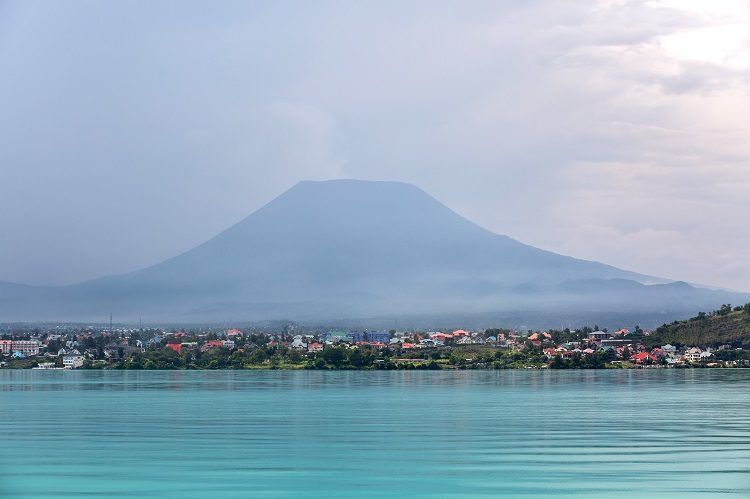
Girls inherit the same hierarchy. In cobalt areas, girls combine unpaid care with washing ore so brothers can stay in school. One in five school-age girls is out of primary school; by the end of secondary the gap is worse. Households that cannot pay fees often keep the sons in class. Child-labour programmes that do not raise a mother's income simply move the child from the pit to the field and back. The African Development Bank's work in cobalt provinces — pulling tens of thousands of children toward school and shifting parents, many of them women, into agribusiness — is built on that insight. Networks such as Renafem and local feminist groups that walk girls from the mine back to the classroom are doing the same at street level.
There are industrial counter-examples worth copying rather than praising and forgetting. At Kamoa, a cadetship and community hiring pipeline has put local people into permanent posts, about half of them women in the early cohorts; more than half of secondary bursaries in a recent year went to girls. MMG Kinsevere has reported women at 16 percent of its workforce, with a target of 20 percent, plus mentoring and university links. Those shares are still modest. They prove the constraint is not a lack of candidates.
Women already run a large part of the everyday economy. AFD has cited figures putting women in charge of around 43 percent of the economic fabric, while World Bank work finds female business profits far below men's — on the order of two-thirds lower — driven by less capital, fewer workers and thinner networks. Projects such as Pour Elles, Equity BCDC's Women Thrive, village savings groups supported by IMPACT, and Personal Initiative training for thousands of women micro-entrepreneurs show that finance plus behavioural and technical support moves income. They are still drops next to the $5 billion subcontracting market around the mines. If ARSP's 51 percent Congolese-ownership rule for subcontractors does not produce women-owned firms that can actually weld, haul and assay, it will have diversified the letterhead, not the economy.
Meaningful opportunity for women is therefore not a CSR breakfast. It is licences that women can hold, credit that does not demand a husband's signature as the real collateral, toilets and lighting on sites, prosecutions for assault, scholarships that survive puberty, and purchasing desks that buy from female suppliers twice.
Young people: the demographic fact that policy keeps postponing
Congo does not have a youth problem. It has an adult-economy problem.
Labour-force data show high participation and high vulnerability: most work is informal, agricultural or own-account. A large share of young people are not in education, employment or training. Mining's formal payroll — on the order of 157,000 in older official counts, and under-counted even then — cannot absorb a cohort of 22 million. Growth that is capital-intensive by nature will not, by itself, employ the country.
In June 2026, on Independence Day, President Tshisekedi launched Debout Jeunes Congolais: vocational training aligned with agriculture, agro-processing, mines, energy, digital, industry, infrastructure and the creative economy; and a national simplified business-plan competition (CONAPAS) to identify, fund and accompany projects in every constituency. The programme is costed at about $1.3 billion over six years, with a first $50 million in the 2026 budget, and an ambition of millions of jobs by 2032. The motto — merit through work, the homeland through enterprise — is the right one if the money reaches provinces rather than Kinshasa workshops. Youth groups have already handed the presidency a cahier des charges demanding jobs, training, and representation in public and private institutions. A launch is not a labour market. Implementation will be judged in Mbuji-Mayi and Bunia, not at the Palais de la Nation.
What has already worked is smaller and more boring. The World Bank's PADMPME project, with $100 million of IDA financing, operated in Kinshasa, Matadi, Lubumbashi and Goma. It helped create just over 6,000 businesses and nearly 15,000 full-time jobs. Participating SMEs saw net sales rise by 63 percent; young entrepreneurs' incomes rose by 43 percent. It trained more than 7,000 women micro-entrepreneurs and 3,000 young founders in Personal Initiative methods. Schoolap, a Kinshasa education platform that grew out of that ecosystem, now serves hundreds of schools and millions of registered pupils. That is inclusion as a product, not a speech.
Youth inclusion also means keeping children out of the pit without impoverishing the household. It means technical schools next to SEZs and smelters, not only universities that produce unplaced graduates. It means apprenticeships with a wage, not "sensitisation." And it means political space: a generation that wrote a national memorandum will not stay grateful for a programme that cannot show placements.
Entrepreneurs: the real private sector
The formal firm is a rarity. Formal enterprises are a fraction of one percent of all units; millions of informal SMEs keep cities fed and mined. They are how women, youth, displaced people and those without degrees survive. They are also how the economy can diversify beyond the pit — into food processing, light manufacturing, logistics, repair, fintech and services — if the state stops treating informality only as a tax target.
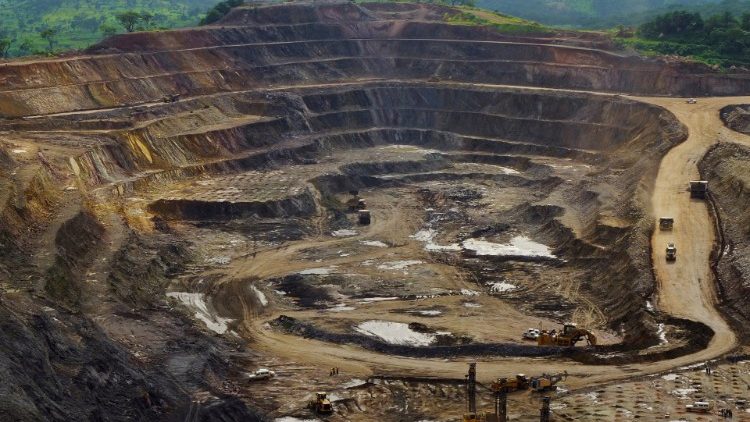
Entrepreneurs collide with the same walls: electricity that fails, credit that requires collateral they do not have, contracts that go to connected houses, and a subcontracting law that is only as good as beneficial-ownership checks. Diaspora and donor programmes keep rediscovering that mentorship plus a first purchase order beats a business-plan seminar.
Inclusion for entrepreneurs is a market design problem:
- First customers. Mines and the state should reserve a rising share of non-specialised procurement for verified SMEs, with payment in 30 days, not 300.
- Patient capital. Ticket sizes of a few thousand to a few tens of thousands of dollars, in local currency, with coaching — the range where most Congolese firms actually live.
- Skills that match invoices. Welding, cold-chain maintenance, food safety, digital bookkeeping, export paperwork.
- Cities as platforms. Kinshasa, Lubumbashi, Goma and Matadi already concentrate talent. Secondary cities need the same banking agents, power and market access or the youth programme will empty the interior.
An entrepreneur who can sell onions and train neighbours, as some women-led rural enterprises already do, is industrial policy at human scale. So is a pharmacy that employs two women and stays open. Scale is not the only virtue. Survival with dignity is the base layer.
The diaspora: more than a wire transfer
Six to eight million Congolese live outside the country. Their remittances — around $2 billion a year — already outrank many aid lines as household finance. That money pays school fees and rent. It is not, by itself, a development strategy. Most of it is consumption. The unused asset is the rest of the package: engineers, doctors, traders, lawyers, operators of plants in Belgium, South Africa, Canada and China, and a willingness some investors describe as a "patriotic discount" — a slightly softer demand for return if the project is real.
What the diaspora says it lacks is a door. Not another forum. A door: one agency that can explain how to register a firm, which SEZ has power, how to syndicate $10,000 with twenty other Congolese in Paris into a Kolwezi fabrication shop, and how to mentor a SME without flying in for a ceremony. Proposals for diaspora investment syndicates, returnship programmes for technical staff, and venture-partner networks that screen deals are the right shape. They fail when they become exclusive clubs for the already connected.
Three uses of the diaspora are worth more than a capital-raising dinner:
- Skills on a tour of duty — six-month placements in smelters, labs, hospitals and technical schools, with a Congolese understudy named in the contract.
- SME partnerships — mentoring and offtake, which UK–DRC bridge programmes have already tested in miniature.
- Accountable capital — pooled vehicles into agro-processing, health, green corridors and responsible mineral services, with public reporting.
The presidency has already asked the diaspora to help Debout Jeunes Congolais. That invitation is empty unless ANAPI, the SME ministry and the banks can tell a pharmacist in Johannesburg where to start on Monday morning.

What "meaningful" has to mean
Inclusion is easy to announce and easy to fake. A meaningful opportunity has four traits.
It changes a balance sheet. A job, a share, a loan, a licence, a contract — not a workshop certificate alone.
It is safe. A woman's shift at a mine or a market that ends with assault is not empowerment. A child's "opportunity" in the pit is a crime, even when the household is hungry.
It is local and portable. Skills and firms that only work inside one company's fence will die when the price falls. Skills that work in Zambia or in a Kinshasa workshop will not.
It is represented. Women, youth, entrepreneurs and the diaspora need seats where rules are written — mining-cadastre committees, SEZ boards, subcontracting audits, community development funds — or the rules will keep fitting someone else.
The 2018 Mining Code's 10 percent Congolese shareholding, split between employees and other nationals, is a rare legal hook for ownership rather than wage labour. If those shares become real claims, inclusion reaches the cap table. If they become a delayed, opaque allocation, they will join the long list of paper rights.
A short agenda that would be felt
- Publish sex- and age-disaggregated employment and procurement data for every industrial mine and SEZ.
- Ring-fence a share of subcontracting and community-fund contracts for women-owned and youth-owned firms that pass a capability test.
- Tie child-labour reduction money to women's income and girls' secondary completion, not only to school enrolment in September.
- Build technical streams — electricity, maintenance, food processing, logistics — in every province that hosts a corridor or a pit, with paid apprenticeships.
- Stand up a single diaspora window with syndicate vehicles and returnship slots, and measure capital and months of skill transferred, not attendees.
- Put protection of women in mining areas into the same political rank as offtake agreements. A critical-minerals partnership that cannot keep a washer safe is not a development partnership.
Congo does not lack people. It lacks bargains that treat those people as co-owners of the country's next industries. Women already move the ore and the market. Young people already invent work when the formal desk is closed. Entrepreneurs already employ their cousins. The diaspora already pays the school bill.
Inclusion is the decision to let them do the same things with power, capital, safety and a path that does not end at the fence. That is how a mineral state becomes a society that can keep its children.
Work with CC360 Global Advocacy
We convene investors, institutions and Congolese partners around responsible, transparent and sovereign resource development.