Peace in the Democratic Republic of the Congo will not be signed into existence in a hotel ballroom. It will be built — or lost — in the hills above Goma, at the Rubaya coltan pits, on the Ruzizi crossing, and in the markets where gold leaves the country without a customs stamp.
The Great Lakes region has lived with that truth for three decades. Minerals did not invent the wars that followed the Rwandan genocide and the collapse of the Mobutu state. They have repeatedly paid for them. Any strategy that treats "peace" and "responsible resources" as separate files will fail both.
The test in 2026 is whether a crowded architecture of talks — Washington, Doha, Geneva, Lomé — can change the incentives of men with guns, or whether the war economy will wait the diplomats out.
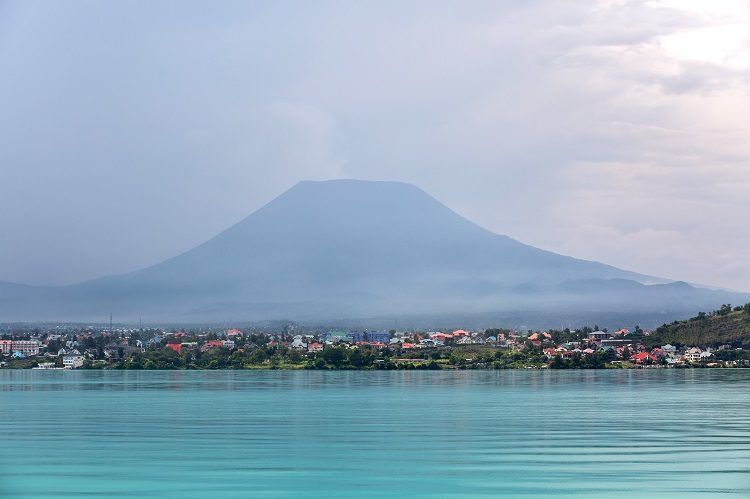
Goma sits on Lake Kivu under Nyiragongo. It is a provincial capital, a humanitarian hub and, since early 2025, a city under rebel administration. Beauty and precarity occupy the same shoreline.
Two wars, one mineral map
Eastern Congo is not a single conflict. It is a stack of them.
At the interstate level, Kinshasa and Kigali accuse each other of using proxies. The Congolese government and the United Nations say Rwanda backs the March 23 Movement (M23) and its political umbrella, the Alliance Fleuve Congo (AFC), with troops and logistics. Rwanda says the Congolese army has failed to dismantle the Forces Démocratiques de Libération du Rwanda (FDLR), a Hutu armed group whose origins lie in the 1994 génocidaires, and that Congolese Tutsi communities remain unprotected. Both claims have been the currency of the last fifteen years. Neither side accepts the other's account.
At the local level, more than a hundred armed groups — Mai-Mai militias, ADF, local self-defence coalitions, criminal networks — compete for checkpoints, pit taxes and smuggling corridors across North Kivu, South Kivu and Ituri. Many of them predate M23's latest offensive. They will outlast a ceasefire that only names the largest rebel movement.
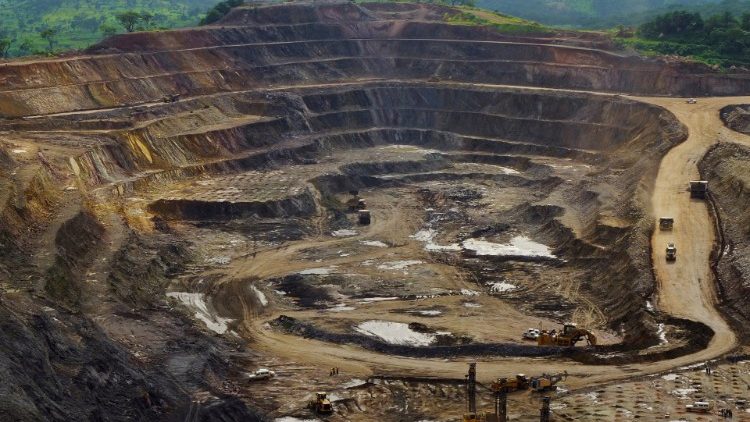
The mineral map sits underneath both layers. Rubaya, seized by M23 in April 2024, accounts for a large share of global coltan (tantalum ore) — often cited around 15 percent of world supply. UN experts have estimated that the group collects at least $800,000 a month by taxing production and trade there, and that tens of tonnes of coltan move toward Rwanda on a regular cycle. Investigators have described the resulting contamination of regional 3T supply chains as the worst in a decade. Gold is worse still: the overwhelming majority of artisanal gold from the east is smuggled rather than formally exported, because gold is small, valuable and easy to launder through refiners in neighbouring capitals.
Control of a mine is not only a military objective. It is a business model. As long as a kilogramme of coltan or a bar of gold pays better than a cantonment camp, armed groups have a reason to stay in the field.
A year of agreements, and a year of fighting
2025 produced more paper than peace.
In June 2025, Congolese and Rwandan foreign ministers signed a US-brokered agreement in Washington: cease hostilities, respect borders, stop support for non-state armed groups, work toward dismantling the FDLR, and open a path to regional economic integration. In November, Kinshasa and AFC/M23 signed the Doha Framework for a Comprehensive Peace Agreement — ceasefire, humanitarian access, prisoner issues, a route toward restoring state authority. On 4 December 2025, Presidents Félix Tshisekedi and Paul Kagame signed the Washington Accords and a Regional Economic Integration Framework in person. The UN Security Council renewed MONUSCO and urged compliance.
Days after the December ceremony, M23 took Uvira in South Kivu, close enough to Burundi's capital to raise the spectre of a wider war. Fighting, drone strikes and displacement continued. By mid-2026, independent monitors put implementation of the interstate deal at about 35 percent: three of thirty tasks completed, eight untouched. Washington sanctioned Rwandan defence structures in March 2026 and gold-smuggling networks in June. Millions of eastern Congolese remain displaced. M23 still administers large parts of the Kivus, including Goma and Bukavu.
In August 2026, after five days of talks in Switzerland, Kinshasa and AFC/M23 agreed a roadmap — sequenced steps and timelines under the Doha framework, a method for reporting ceasefire violations, and a verification mission to Minembwe supported by MONUSCO. Prisoners have begun to move, in small numbers, through the ICRC. That is not nothing. It is also not a settlement. Sanctions, detainee releases and the timing of political reforms remain contested. A roadmap is a promise to keep talking. The hills have heard that promise before.
Why "peace for minerals" is a dangerous shorthand
Outside capitals, the temptation is to treat Congolese peace as a procurement problem: secure the mines, certify the bags, build a corridor to the Atlantic, and stability will follow.
That logic has a grain of truth. Legal, taxable trade is a rival to the checkpoint. The Lobito Corridor and any Regional Economic Integration Framework that actually moves goods under customs authority can shrink the premium on smuggling. Responsible-sourcing rules that deny armed groups a market are part of the OECD minerals guidance for a reason.
The shorthand is still dangerous, for four reasons.
First, minerals are not the only fuel. Land, citizenship, communal memory and the presence of the FDLR in Congolese forests are security problems that predate the smartphone. A minerals deal that leaves those questions untouched will be raided by the next militia that can tax a road.
Second, certification is only as honest as the first tag. The International Conference on the Great Lakes Region (ICGLR) built a Regional Certification Mechanism precisely to stop 3TG from financing armed groups. Five member states implement it. Congolese officials now accuse the same regional systems — and schemes such as ITSCI — of certifying material that left occupied territory. If ore from Rubaya can be mixed with Rwandan production and exported with a clean label, due diligence becomes a laundering service. Kinshasa's complaint and Kigali's denial cannot both be fully true; the discrepancy in Rwanda's declared export volumes versus plausible domestic geology is why the question will not go away.
Third, boycotts displace rather than drain the war economy. Research on the early Dodd-Frank years found conflict intensity falling in some 3T areas and rising around gold, the metal the law could not trace well. When formal exporters lose supply, traders walk to the next border. Roughly 98 percent of eastern artisanal gold already does. A responsible-sourcing policy that is serious about peace has to keep legal channels open for artisanal miners, not close them in the name of purity.
Fourth, the people who live next to the pits are not a side constraint. Landslides at Rubaya in 2026 killed on a scale that should have been treated as a national emergency. Child labour, beatings and unsafe shafts are not "externalities" of a critical-minerals strategy. They are the conditions under which coltan enters the world. A peace that restores industrial offtake without restoring safety and consent is a change of landlord.
What constructive dialogue has to include
Dialogue that lasts is not only the presidential handshake. It has to operate on four levels at once.
Interstate. The Washington track is the right container for the Rwanda–DRC security dilemma: FDLR neutralisation on one side, Rwandan disengagement and an end to support for M23 on the other. Those two obligations have to move together. Sequencing that asks one capital to go first is how previous deals died. The Joint Oversight Committee and the Joint Security Coordination Mechanism exist. They will matter if they measure troops and proxy logistics, not communiqués.
Belligerent. The Doha track is the only place Kinshasa and AFC/M23 can bargain over territory, amnesty, integration and political status. Refusing to talk to a group that holds two provincial capitals is a slogan, not a strategy. Talking without a verification mission that can report violations in public is theatre. The Geneva roadmap's first test is whether the Minembwe verification visit becomes a habit.
Regional. Burundi, Uganda and Tanzania are not spectators. Uvira's fall threatened Bujumbura. Ugandan operations against ADF cut across Ituri and North Kivu. The African Union's Lomé architecture — a Togolese mediator, a panel of facilitators, a joint secretariat — is an attempt to stop Washington and Doha from drifting into rival theatres. ICGLR members have a further duty: if the Regional Certification Mechanism cannot tell occupied-territory ore from legal ore, it is not a peace tool.
Local. Lasting ceasefires in the Kivus have always required bargains among customary authorities, displaced communities, churches, women's associations and the militias that call themselves self-defence. National deals that ignore those tables are rewritten on the footpath. Community dialogue is slow. It is also how you find out whether a "restored state presence" looks like protection or like another predatory checkpoint.
Responsible resource governance as a peace instrument
If governance is going to contribute to peace, it has to change the price of violence.
That means making legal trade pay more than the pit tax. Formal gold circuits collapsed when informal buyers across the border paid better. Closing that gap requires competitive official prices, less predatory taxation at the legal comptoir, and security on the road to the official exporter — not only a new certificate.
It means refusing contaminated batches, including when they arrive with a neighbouring country's stamp. Downstream companies that treat ICGLR or industry tags as a substitute for knowing the mine site are not practising due diligence. They are outsourcing it to a system under stress. Sanctions on named smuggling networks are a complement, not a substitute, for that commercial refusal.
It means putting artisanal miners inside the peace, not outside it. Hundreds of thousands of people in the east live from 3T and gold. A settlement that criminalises them overnight will feed the next militia's recruitment. Formalisation, safe shafts, child-labour alternatives and offtake that does not run through an armed cashier are peacebuilding with a pickaxe.
It means separating the Copperbelt from the Kivu war without pretending they are unrelated. Industrial copper and cobalt in Lualaba and Haut-Katanga are not under M23. Using those mines as bargaining chips in a "minerals for security" pact can bring investment. It can also convince armed groups that holding Goma is a way to sit at the same table. Offtake agreements should be conditioned on verifiable security benchmarks, not used as a substitute for them.
It means funding the unglamorous state: cadastral records, laboratories that can assay ore, customs officers who are paid enough not to sell the stamp, courts that can try pillage. MONUSCO can support a verification mission. It cannot collect a mineral royalty.
The humanitarian bottom line
Roadmaps are written in English and French. The war is lived in Kinyarwanda, Swahili and the languages of the highlands. Several million people in the east are displaced. Civilian killings have continued in months when diplomats were congratulating themselves. Epidemic risk rides with the camps. None of that is collateral. It is the measure.
Humanitarian access was in the Doha text for a reason. A ceasefire that aid agencies cannot use is a ceasefire for the communiqué. Protection of civilians — including against sexual violence, which has been a weapon in every cycle of this war — has to be an operational clause, not a preamble.
What would "lasting" look like
A durable settlement in the Great Lakes would not be the absence of armed men. It would be a set of conditions in which armed men cannot get rich.
- Rwandan and Congolese security claims are addressed in parallel, with third-party verification that publishes what it sees.
- M23 leaves the cities it holds under a political arrangement that is specific enough to implement and modest enough not to partition the country.
- The FDLR is reduced from a pretext and a presence to a police problem.
- Coltan and gold from the Kivus move through channels that a customs officer, a community monitor and a downstream auditor can all see.
- Refugees and internally displaced people can go home without walking back into a militia tax.
- Neighbouring states make more money from legal transit and power trade than from informal ore.
That list is longer than any single agreement signed in 2025 or 2026. It is also the only list that matches the slogan. Constructive dialogue is the method. Responsible resource governance is one of the instruments. Lasting peace is the test — and the test is administered in Rubaya and Goma, not in the room where the roadmap was typed.
Work with CC360 Global Advocacy
We convene investors, institutions and Congolese partners around responsible, transparent and sovereign resource development.