
Industrialisation is the missing verb in Congo's mineral story. The country already extracts. It already exports. What it does too little of is make.
Local processing, manufacturing, infrastructure, technology transfer, entrepreneurship and quality employment are not five separate programmes. They are one sequence. Without power and rails, a precursor plant is a drawing. Without skills, a smelter is staffed by contractors who leave. Without Congolese firms that can bid, local-content laws become letterhead companies. Without decent jobs, a young country of 100 million people watches the boom from outside the fence.
President Tshisekedi has said the Lobito Corridor must not be "a simple corridor for evacuating raw materials" but a corridor of production, transformation and value. That sentence is the industrial policy. The work is to make it true.
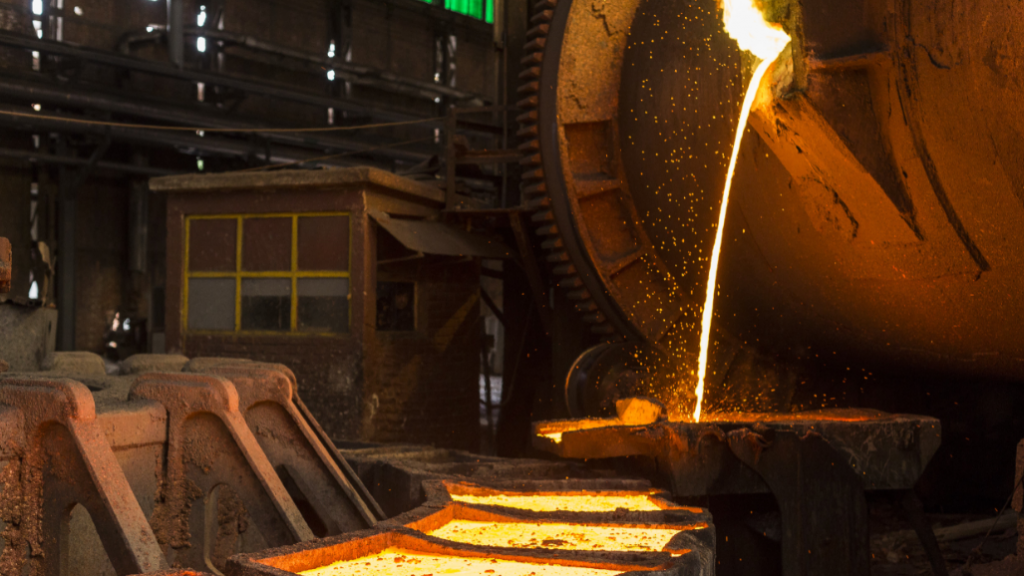
Smelting is the first industrial act after the mine. It turns concentrate into metal, cuts freight, creates specialised jobs — and still leaves most of the battery's value further down the chain.
What industrialisation has to mean here
In a country where mining is about a quarter of GDP and more than 90 percent of exports, industrialisation is often reduced to "beneficiation": do not ship the raw rock. That is necessary and insufficient.
A useful hierarchy looks like this:
- Concentrate to metal — copper anodes and cathodes, cobalt hydroxide to metal or sulphate.
- Metal to intermediate chemicals — battery precursor (pCAM), copper rod, wire and foil.
- Chemicals to components — cathodes, cables, transformers, two- and three-wheel electric vehicles.
- The industrial ecosystem — reagents, spare parts, fabrication, logistics, food processing, construction materials, digital services.
Most of the margin in a battery pack sits in steps 2 and 3. Most of what the DRC currently does well sits in step 1, and even that is incomplete. The honest strategy is to climb the first two steps where geology and logistics allow, and to build a much larger set of ordinary factories that employ people who will never see a solvent-extraction circuit.
The UN Economic Commission for Africa has argued that a 10,000-tonne battery-precursor plant in the DRC could cost on the order of $39 million — far less than an equivalent plant in the United States — if power, reagents and offtake can be lined up. That is the opportunity. The constraint is everything around the building.
Processing: the rung that is actually being climbed
The country is no longer only a quarry.
Kamoa-Kakula's direct-to-blister smelter, using Metso Outotec technology and designed to IFC emissions standards, took first concentrate in December 2025. Capacity is 500,000 tonnes a year of 99.7 percent copper anodes — the largest copper smelter in Africa, and one of the largest single-line flash smelters in the world. It is meant to swallow most of the complex's concentrate; excess can go to the nearby Lualaba Copper Smelter. The unit employs about a thousand people in specialised roles. Operators were trained in China and at a Zambian plant that uses the same technology. That is technology transfer with a payroll.
Other rungs are appearing. Eurasian Resources Group has been completing a hydrometallurgical plant in Lualaba aimed at copper cathode and cobalt. Buenassa Resources has advanced an integrated copper-cobalt refinery designed for high-grade cathode and battery-grade cobalt sulphate. Manono lithium is moving toward first production, which is the moment to insist on processing plans rather than repeating the hydroxide-only path of cobalt.
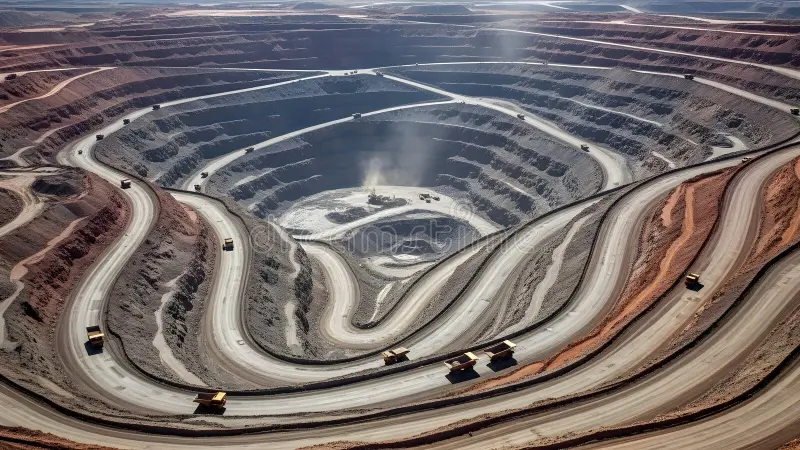
Further up, the Musompo Special Economic Zone in Lualaba — 900 hectares, approved as a priority project — is intended for nickel-manganese-cobalt precursor powders. Officials have talked of more than $200 million in construction costs, up to $2 billion of private capital, and tens of thousands of direct and indirect jobs. A DRC–Zambia precursor concept has been on the table since 2023. These numbers are ambitions, not operating plants. Cathode and cell factories, where most of the margin sits, do not yet exist anywhere on the continent at scale. Getting precursor right would still be a historic step. Getting the press release right would not.
Export policy is being used as a prod. Concentrate bans and cobalt quotas are meant to force operators to sell a more processed product. The risk is familiar from every resource-nationalist cycle: ban first, capacity later. Indonesia's nickel story worked because smelters and industrial parks arrived with the ban. The DRC should attach processing milestones to quotas and licences — and waive the ban only where a credible, financed plant is under construction, not where a memorandum of understanding has been framed.
There is also a quieter industrial path that uses less power. World Bank-type simulations have suggested that copper cables, electrical components and battery foil may be more realistic near-term bets than a full precursor complex. Congo Câbles & Transformers in Lubumbashi and Proton CABELEC in Kinshasa already point that way. A transformer built in Congo for a Congolese grid is industrialisation that does not need a Shanghai offtaker.
Power: the factory that must be built first
No industrial policy survives a 5,000-megawatt deficit. Southern mining provinces alone have been short some 900 MW. Adding a single gigawatt, the finance ministry has said, could double mining output. Operators already lean on diesel and self-built solar-plus-storage. That is not a platform for chemicals.
Inga is the long horizon. The site's full potential is often put near 40–42 GW. Inga 3, depending on configuration, is discussed in a range from about 2 to 11 GW. World Bank support has been framed around preparing the project, an associated growth corridor, and services for nearby communities. Local programmes in Kongo Central are supposed to start delivering schools and an "Inga Academy" before the dam itself pours concrete, training young people within 50 kilometres for construction and maintenance jobs. If that sequence holds, it would be a rare case of skills arriving before the turbine. If it does not, Inga will remain what it has been for half a century: the largest unbuilt argument in African energy.
Meanwhile the grid that exists has to work. Cross-border links with Zambia and Angola, methane from Lake Kivu, Ruzizi III, metro-grid projects that can reach more than a million urban residents, and mine-site solar are the bridges to 2030. The National Energy Pact's aim of raising access from roughly one in five people toward 60 percent is not a social add-on. Households that cook on charcoal and firms that run generators cannot host a manufacturing class. Energy for industry and energy for people are the same investment.
Tshisekedi put it plainly to Angola's president: railway, mining, agricultural and industrial ambitions will not materialise without energy cooperation, including supply to Grand Katanga. That is the correct order of operations.
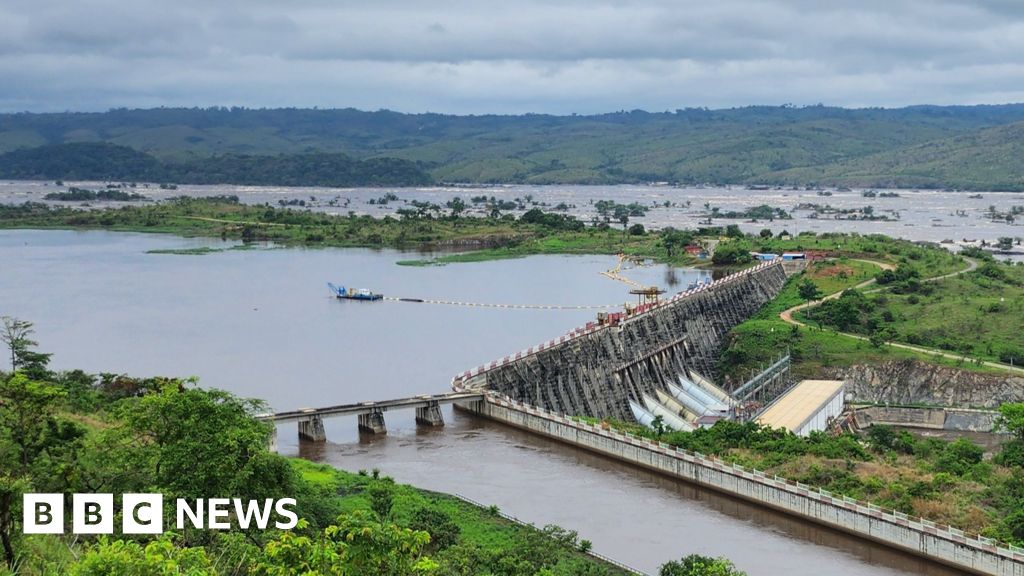
Inga's existing dam on the Congo River is a reminder that hydropower is not a dream. The next phases are. Until they exist, industrialisation will be rationed by the grid.
Infrastructure that creates markets, not only exits
A rail line that only carries concentrate to a port is a more efficient quarry. A rail line that also carries maize, cement, fuel, passengers and spare parts is an industrial spine.
The Lobito Corridor — roughly 1,300 kilometres from the Copperbelt to Angola's Atlantic coast — is the most important logistics bet of the decade. Transit times that used to exceed a month can fall toward a week. The United States, the European Union and the African Development Bank have put capital into track, trade facilitation and side investments in agriculture and power. Congolese officials project tens of thousands of jobs if the corridor is more than a mineral pipe. Prime Minister Judith Suminwa has insisted it must improve living conditions and dignity, not only tonnage.
The industrial test is whether stations become towns: agro-processing, repair workshops, cold chains, border posts that work, vocational centres. McKinsey-style cluster analysis makes the same point at continental scale: shared ports and plants can cut unit costs by around a fifth and support large employment if projects are not built as isolated islands. Lobito is that cluster if policy treats the land beside the track as a production zone.
Digital infrastructure belongs in the same sentence. A precursor plant, a customs system and a small manufacturer all need reliable connectivity. Data centres powered by Inga and cooled by the river are a later prize. Fibre to Kolwezi and Maluku is the present one.
Special economic zones: useful if they are real
The DRC's SEZ programme is meant to offer serviced land, power, water and faster rules. The pilot at Maluku, more than 800 hectares on Kinshasa's northeastern edge, is operational and hosts light manufacturing, agro-processing, construction materials and logistics. A ceramics plant using domestic clay, feldspar and quartz, and a large beverage operation that claims thousands of direct and indirect jobs, are the sort of tenants that justify a zone: they use local inputs and hire people who are not fly-in metallurgists. Further zones have been sketched for mining and agro-industry in places such as Mbuji-Mayi.
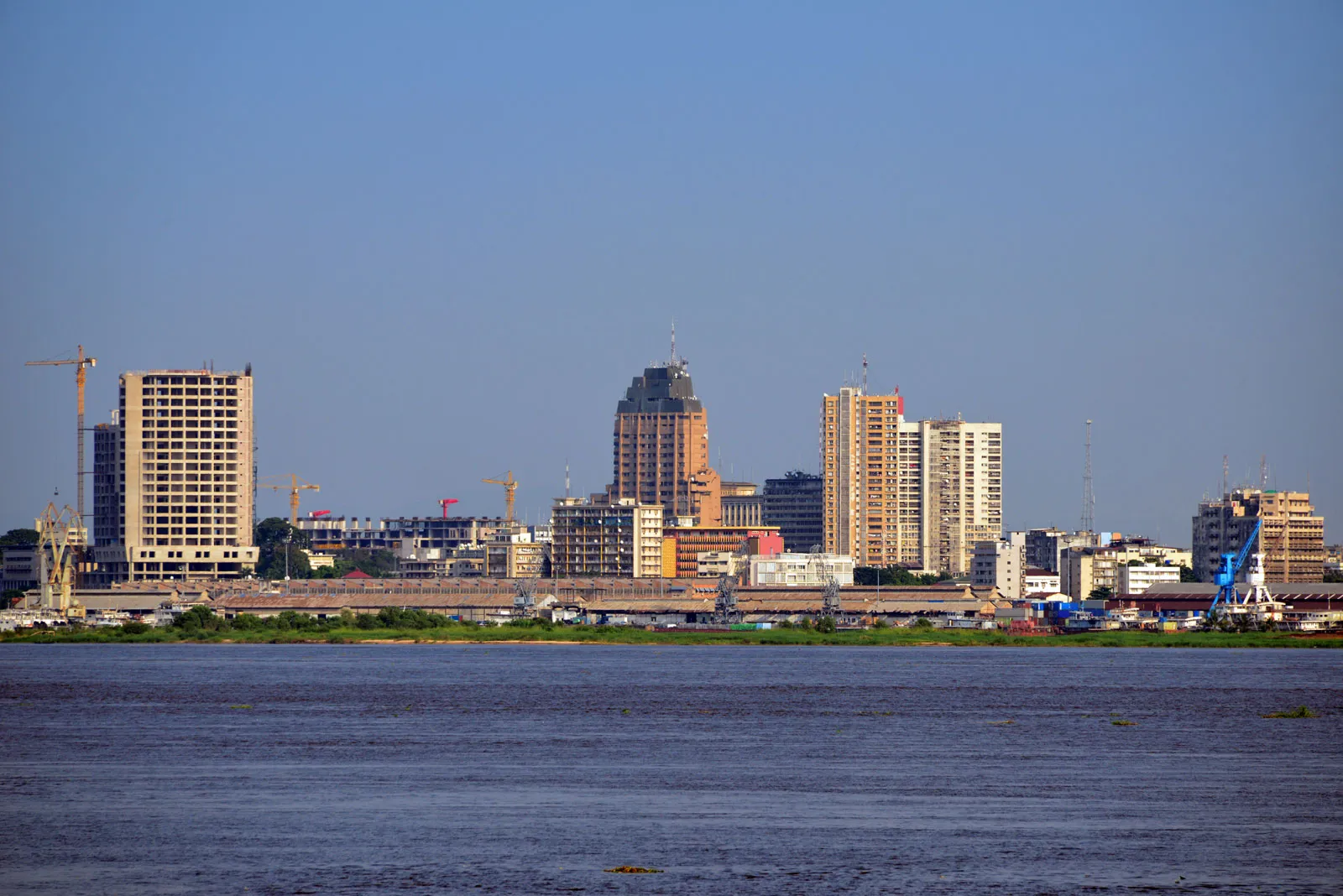
Musompo is the mineral-industrial wager. Maluku is the urban-manufacturing one. Both will fail if they become tax islands that import everything except the labour. Zones work when they pull in domestic suppliers, train workers who can leave and start firms, and plug into a national grid rather than a private generator compound.
Technology transfer that sticks
Technology does not transfer because a contract says it must. It transfers when a Congolese engineer can restart the line on Sunday night.
Kamoa's smelter training pipeline — China, Zambia, then the control room in Lualaba — is the model to copy and widen. Licence conditions should require:
- named Congolese understudies for critical posts, with a timetable to take them;
- maintenance manuals and software in French and the languages of the site;
- partnerships with universities and technical institutes that produce assay chemists, instrumentation technicians and welders, not only generalists;
- the right to use process know-how in later domestic plants after a defined period.
The African Green Minerals Strategy, adopted by the African Union in 2025, puts "developing people and technological capabilities" on the same level as digging more ore. That is the right ranking. A Green Mineral Value Chain Investment Fund and regional content rules under the African Continental Free Trade Area are only useful if someone in Kolwezi can operate the autoclave.
Technology transfer also runs through procurement. When 70 percent of goods for a mine are bought from Congolese companies, as Kamoa has reported, those companies learn specifications. When $8 billion-plus has gone to local suppliers since production began, a supplier class exists to upgrade. The next step is not more catering contracts. It is fabrication, reagents blending, electrical assembly.
Entrepreneurship and the $5 billion side market
Industrial mining's formal payroll will never absorb Congo's youth bulge — some 22 million people aged 15–24 in 2025, heading toward 26 million by 2030. The jobs that can are in firms around the mine and far from it.
The 2017 subcontracting law, now more tightly enforced by ARSP, requires subcontractors to be at least 51 percent Congolese-owned. The annual subcontracting market around the mines has been estimated near $5 billion. In early 2026, majors faced audits and brief freezes on new awards until they showed compliance. That is how a domestic middle class is supposed to be born. It is also how politically connected shells are born. The difference is whether ARSP verifies beneficial ownership and capability, or only a stamp.
Entrepreneurship policy should favour firms that:
- make something (parts, food, bricks, cables) rather than only broker access;
- hire and train beyond the owner's family;
- can sell to more than one mine, so they survive a commodity slump;
- include women, who are already a large share of artisanal and trading work and a small share of industrial contracts.
World Bank programmes aimed at women entrepreneurs and MSME upgrading, EU vocational support along Lobito, and community businesses that mines seed as first customers are the unglamorous tools. A youth who can maintain a cold room or a solar mini-grid is an industrial asset. A youth who can only carry a sign at a ribbon-cutting is not.
Quality employment, not just headcount
"Jobs" is the most abused word in extractive politics. A casual day rate at a construction camp is not the same as a smelter technician post with training, protection and a path to supervision.
Quality employment in this context means:
- Safety and formality — contracts, injury compensation, the right to refuse an unsafe shaft.
- Skills that travel — a certificate recognised in Zambia and Kinshasa, not only on one site.
- Wages that build a household — because industrialisation that leaves 80 percent poor has failed its own test.
- Inclusion of artisanal miners — hundreds of thousands of people already process minerals with their hands. Industrial policy that treats them as a nuisance will recreate the informal city at the factory gate.
- Women in technical roles, not only in catering and community-liaison offices.
A thousand specialised smelter jobs matter because they set a standard. Sixty thousand "indirect" jobs promised for a zone matter only if they exist and if they pay.
A practical sequence
Industrialisation fails when everything is launched at once. A workable order for the next decade:
Stabilise power in the Copperbelt and Kinshasa — interconnectors, solar-plus-storage at plants, metro grids, a credible Inga 3 financial close. No new chemical park without a signed electrons contract.
Finish the metal step — anodes, cathodes, sulphates. Tie concentrate-export waivers to commissioned capacity.
Build two or three real clusters, not twenty zones on paper — Maluku for urban manufacturing and agro-processing; Musompo/Kolwezi for mineral chemistry; a Lobito-side node for logistics and food. Share labs, training and spare-parts stores.
Write technology transfer into every large contract — named people, named courses, named dates.
Enforce local content on substance — 51 percent ownership plus the ability to do the work.
Use AfCFTA — a precursor plant that can sell into Zambia and a cable plant that can sell into Angola are more viable than plants that see only the domestic market.
Measure what matters — megawatts delivered, share of exports that are metal or chemicals rather than concentrate, number of Congolese in technical grades, SME survival rates after three years, formal jobs for women and youth. Tonnes mined are a mining statistic. They are not an industrial one.
The point of the factory
The DRC does not need to become China. It needs to stop being only a hole in the ground that the rest of the world assembles into a battery.
That requires furnaces and precursor mixers. It also requires transformers made in Lubumbashi, tiles made from Congolese clay, cold chains on the Lobito line, and a generation of technicians who learned the plant by running it.
Industrialisation is how economic sovereignty becomes visible in a pay slip. It is how responsible minerals become something more than a due-diligence template. It is how peace, if it holds, finds a civilian economy worth protecting.
The ore will keep coming out of the ground. The open question is whether the next decade builds the rooms in which Congolese hands turn that ore into products — and into employment that can support a family without a generator in the yard.
Work with CC360 Global Advocacy
We convene investors, institutions and Congolese partners around responsible, transparent and sovereign resource development.