
Abstract
The Democratic Republic of Congo already occupies a decisive place in global mineral supply. Industrialisation is the unfinished half of that fact. This note sets out how the country can move from concentrate and intermediate chemicals toward processing, manufacturing and broader economic opportunity — and why that shift is an economic-development strategy, not a slogan attached to a mine.
The argument is sequential. First, name the value that currently leaves with the ore. Second, distinguish rungs on the ladder that are already being climbed (anodes, cathodes, sulphates, special economic zones) from rungs that remain drawings (precursors at scale, cells, ordinary manufacturing). Third, treat power, logistics, skills, local firms and market access as industrial policy, not "enablers" to be mentioned last. Fourth, place people — women, youth, entrepreneurs, the diaspora — inside the factory plan, because a smelter that does not multiply employment is only a more sophisticated quarry.
The conclusion is practical. Congo does not need to capture every step of a battery pack in one decade. It needs a dated pathway that keeps more metal, more chemicals, more components and more wages on Congolese soil — and a rulebook that rewards operators who build that pathway rather than those who only export the rock.
1. The development problem, stated without romance
Mining is a large share of Congolese GDP and the overwhelming share of merchandise exports. That concentration is both leverage and a trap. Leverage, because the energy transition cannot easily substitute away from Congolese cobalt and is increasingly hungry for Congolese copper. A trap, because an economy organised around unprocessed or lightly processed exports imports its factories, its technicians and its price-setting.
Industrialisation, in this brief, means five things at once:
- Processing — concentrate to metal and metal to battery-relevant chemicals.
- Manufacturing — cables, foil, transformers, construction materials, agro-processed goods, later components.
- Infrastructure — power, rail, ports, digital links that make plants bankable.
- Technology and firms — know-how that remains when the expatriate rotation ends; Congolese companies that can bid.
- Quality employment — not only construction peaks, but occupations that pay, train and survive a price slump.
Without that package, "value addition" is a customs code. With it, minerals become the first market for a wider productive system — the same sequence every successful resource industrialiser has had to manage, from earlier copper economies to Indonesia's nickel parks.
The African Union's Green Minerals Strategy and UNECA work on SADC industrialisation make the continental case: Africa's opportunity is not only to supply green minerals but to host segments of green industry. UNECA has noted that a modest precursor plant in the DRC could be built at a fraction of US capital cost if power, reagents and offtake exist. That conditional clause is the entire industrial problem.
2. Where value sits — and where Congo sits today
A lithium-ion pack is a stack of margins. Geology captures the first. Solvent extraction, smelting and refining capture the next. Precursor and cathode capture more. Cells and packs capture most of what consumers pay. Circularity (recycling) will capture a rising residual.
Congo's present position is still front-loaded:
- Ore / concentrate — the dominant export form for much of copper; cobalt mostly as hydroxide rather than metal or sulphate. High volume, thin domestic multiplier.
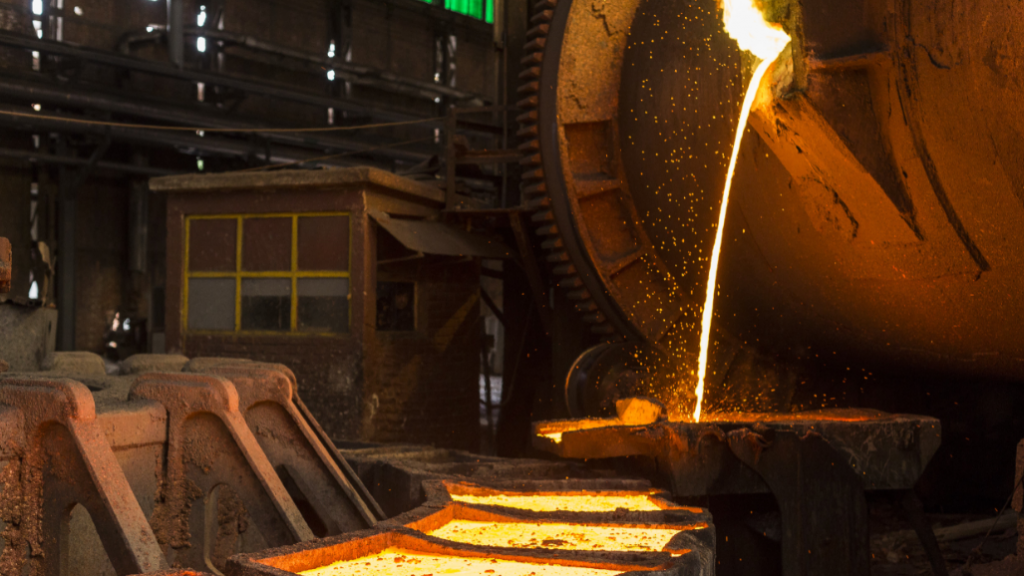
- Metal (anodes, cathodes) — Kamoa-Kakula's direct-to-blister smelter in operation from late 2025 (~500 kt/y anodes); other hydro-met and refinery projects advancing. The first serious industrial act after the pit: specialised jobs, lower freight.
- Battery chemicals (sulphate, pCAM) — policy ambition; Musompo SEZ approved for NMC precursor; the DRC–Zambia precursor concept still unbuilt at scale. Where energy-transition rents thicken.
- Components / cells — not present at commercial scale anywhere in Africa. High skill, high power, brutal global cost curves.
- Adjacent manufacturing — Maluku SEZ (ceramics, beverages, light industry, logistics); cable and transformer pioneers in Lubumbashi and Kinshasa. Jobs that do not require a Shanghai offtaker.
Two implications follow.
Climb the first two rungs now. Anodes and specified chemicals are feasible where deposits, plants and (scarce) power coincide. They also shorten diligence chains — a theme of the companion minerals brief.
Do not wait for cells before building factories that Congolese demand can pay for. Wire, transformers, tiles from domestic clay, food processing along Lobito, repair and fabrication for mines: these are industrialisation that survives if a precursor offtake slips a year.
World Bank-type comparisons have already suggested that copper rod, cable and foil may be less power-hungry — and therefore more realistic near-term — than a full precursor complex. Pioneer plants exist. Policy should multiply them rather than photograph them.
3. Pathway one — process what is already mined
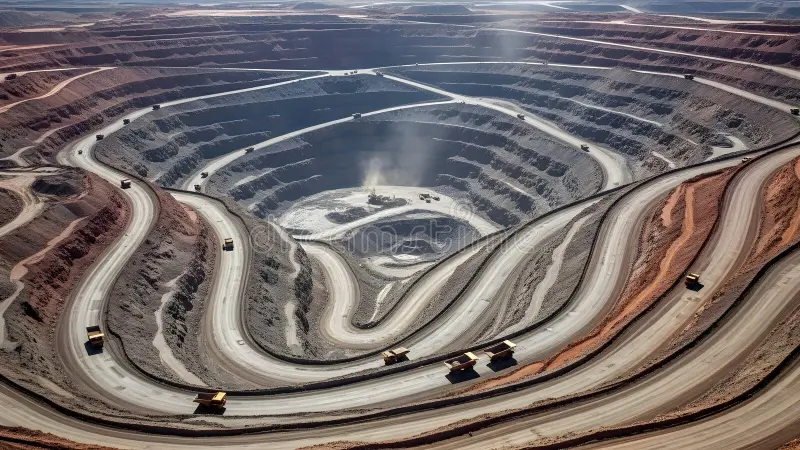
3.1 The smelter as proof of concept
Kamoa-Kakula's on-site flash smelter, using imported process technology and designed to international emissions standards, took first concentrate in December 2025. Design capacity is on the order of half a million tonnes of 99.7 percent copper anodes a year, among the largest single-line units in Africa. Excess concentrate can go to Lualaba Copper Smelter. The plant created about a thousand specialised jobs; operators trained in China and at a Zambian twin-technology site. That is industrialisation with a payroll and a training pipeline, not only a capex announcement.
Other processing bets are in motion: hydrometallurgical capacity, an integrated copper-cobalt refinery aimed at cathode and battery-grade sulphate, and Manono lithium approaching first production — the moment at which processing conditions must be locked in, or lithium will repeat cobalt's "hydroxide only" history.
3.2 Export rules as industrial tools — and as industrial risks
Concentrate and intermediate-export restrictions are the state's blunt instrument. They can work when plants, power and buyers are ready, as Indonesia showed in nickel. They backfire when they outrun capacity: leakage, waiver politics, idle pits, and diligence systems that treat Congolese supply as erratic.
A workable rule is simple to state and hard to administer:
- No open-ended ban without a published processing queue (who smelts what, by when, with which megawatts).
- Waivers time-bound, disclosed, and tied to construction milestones.
- Quota and licence criteria that score local processing, not only political access.
- For new minerals (lithium), processing plans inside the licence, before first ore.
Resource Matters' 2025–26 work on moving from raw ore to local processing makes the same point: SEZs and quota design should pull cobalt past hydroxide toward precursor, while copper products that the grid itself can consume should not be ignored.
3.3 Special economic zones that earn their incentives
Maluku, the Kinshasa pilot of more than 800 hectares, is operational in light manufacturing, agro-processing, construction materials and logistics. A ceramics plant using Congolese clay and a large beverage operation are the right kind of tenant: local inputs, visible employment. Musompo in Lualaba — some 900 hectares, cleared as a priority, aimed at NMC precursor, with official talk of large private capital and tens of thousands of jobs — is the mineral-chemical wager. Construction rhetoric began in 2025; cathode and cell stages remain unbuilt on the continent.
Zones fail when they become tax islands that import everything except labour. They work when they share labs, power and training with the surrounding city, and when domestic firms can sell into them.
4. Pathway two — build the factory's factory (power and logistics)
4.1 Electrons before precursors
Industrial policy that ignores the grid is literature. The national deficit has been estimated above 5,000 MW; southern mining provinces alone have been short on the order of 900 MW. The finance ministry has linked an extra gigawatt to a possible doubling of mining output. Operators already self-provide diesel and solar-plus-storage. That can run a mine. It is an expensive way to run a chemicals park.
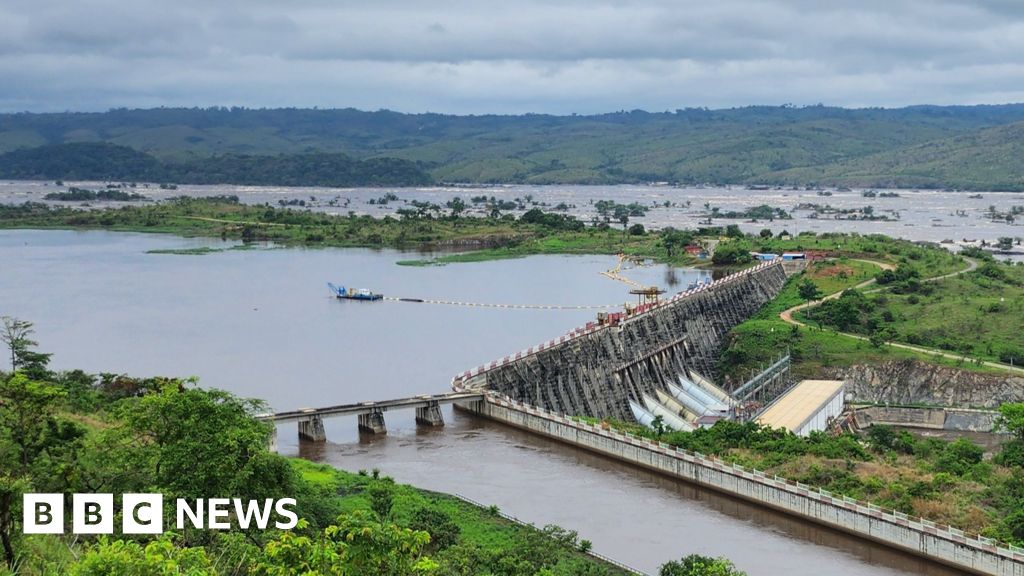
Inga remains the strategic horizon (site potential often cited near 40 GW; Inga 3 discussed in a 2–11 GW band depending on configuration). World Bank preparation work now frames an Inga growth corridor — skills, local services, possible nearby industry — rather than a dam in isolation. If "Inga Academy" and provincial training start before first concrete, Congo will have inverted a fifty-year pattern. If they do not, Inga will remain the largest unbuilt sentence in African energy.
Meanwhile industrialisation in this decade runs on interconnectors with Zambia and Angola, Kivu methane, Ruzizi III, urban metro-grids, and mine-site renewables. Household access (still roughly one in five people) is not a social afterthought. Firms do not cluster where households cook on charcoal and shops run generators.
President Tshisekedi's line to Angola is the correct order of operations: railway, mining, agriculture and industry will not materialise without energy cooperation, including supply into Grand Katanga.
4.2 Corridors that produce, not only evacuate
The Lobito Corridor is the logistics bet of the decade: Copperbelt to the Atlantic, transit times that can fall from more than a month toward a week, layered US, EU and African Development Bank capital. Congolese officials have projected large job numbers if the line is more than a mineral pipe. The President has said the ambition is not a corridor of raw-material evacuation but of production, transformation and value. That sentence should be written into station-area land use: agro-processing, workshops, border posts that work, vocational centres. A rail that only carries concentrate is a more efficient quarry.
Cluster economics supports the same design. Shared ports and plants can cut unit costs and support employment when projects are not built as isolated islands. Lobito plus Kolwezi processing plus a Zambia precursor concept is that cluster — if three governments can share a plant only one of them can host.
5. Pathway three — technology transfer that stays and firms that can bid
Technology does not transfer because a clause says so. It transfers when a Congolese shift supervisor can restart the line.
Kamoa's training route (China, Zambia, then Lualaba) is the template: named understudies, manuals in the languages of the site, partnerships with technical institutes, a sunset on exclusive process secrecy for later domestic plants. The African Green Minerals Strategy is right to rank "people and technological capabilities" with digging more ore.
Procurement is the quieter transfer mechanism. Kamoa has reported on the order of $8.3 billion spent with local suppliers since production began, about 70 percent of goods bought from Congolese companies, and compliance with the 51 percent Congolese-ownership subcontracting rule enforced by ARSP. That is a supplier class in formation. The next industrial task is to move it from catering and haulage into fabrication, reagents, electrical assembly and maintenance. Enforcement waves in 2026 that froze some majors' new awards until they showed compliance are the right instinct if ARSP verifies capability and beneficial ownership, not only a stamp. The subcontracting market around mines has been estimated near $5 billion a year. That is an industrialisation budget hiding in invoices.
SEZs and mines should publish supplier graduation metrics: how many Congolese firms moved from services to goods, how many hired outside the owner's family, how many sell to more than one mine.
6. Pathway four — manufacturing beyond the pit
A minerals-to-industry strategy that only talks batteries will miss most Congolese workers.
Use the mine as an anchor market. PPE, bolts, concrete, food for canteens, vehicle repair, uniforms, software for weighbridges. Local-content law is the demand instrument; quality standards are the supply instrument.
Use cities as industrial platforms. Maluku for Kinshasa's consumer and construction market; Lubumbashi–Kolwezi for mineral-linked fabrication; Goma and the east when security allows agro-processing and reconstruction materials; river-port logistics at Matadi.
Use agriculture as the second engine. A corridor that carries maize and cold-chain goods as well as anodes creates firms that do not live or die with cobalt prices. EU and AfDB side-investments along Lobito already point there; they need Congolese SMEs as first contractors, not only as trainees.
Use regional trade. AfCFTA and SADC demand make a cable plant or a precursor line more viable than a factory that sees only the domestic grid. A plant that can sell into Zambia and Angola is an industrial object. A plant that cannot clear a border in a week is a warehouse.
PADMPME's results — more than 6,000 businesses created, nearly 15,000 full-time jobs, sharp sales growth among participating SMEs, thousands of women and youth trained — show that entrepreneurship support is industrial policy when it is tied to real markets. It is not a substitute for megawatts. It is how megawatts find users besides the mine.
7. Pathway five — employment that can carry a household
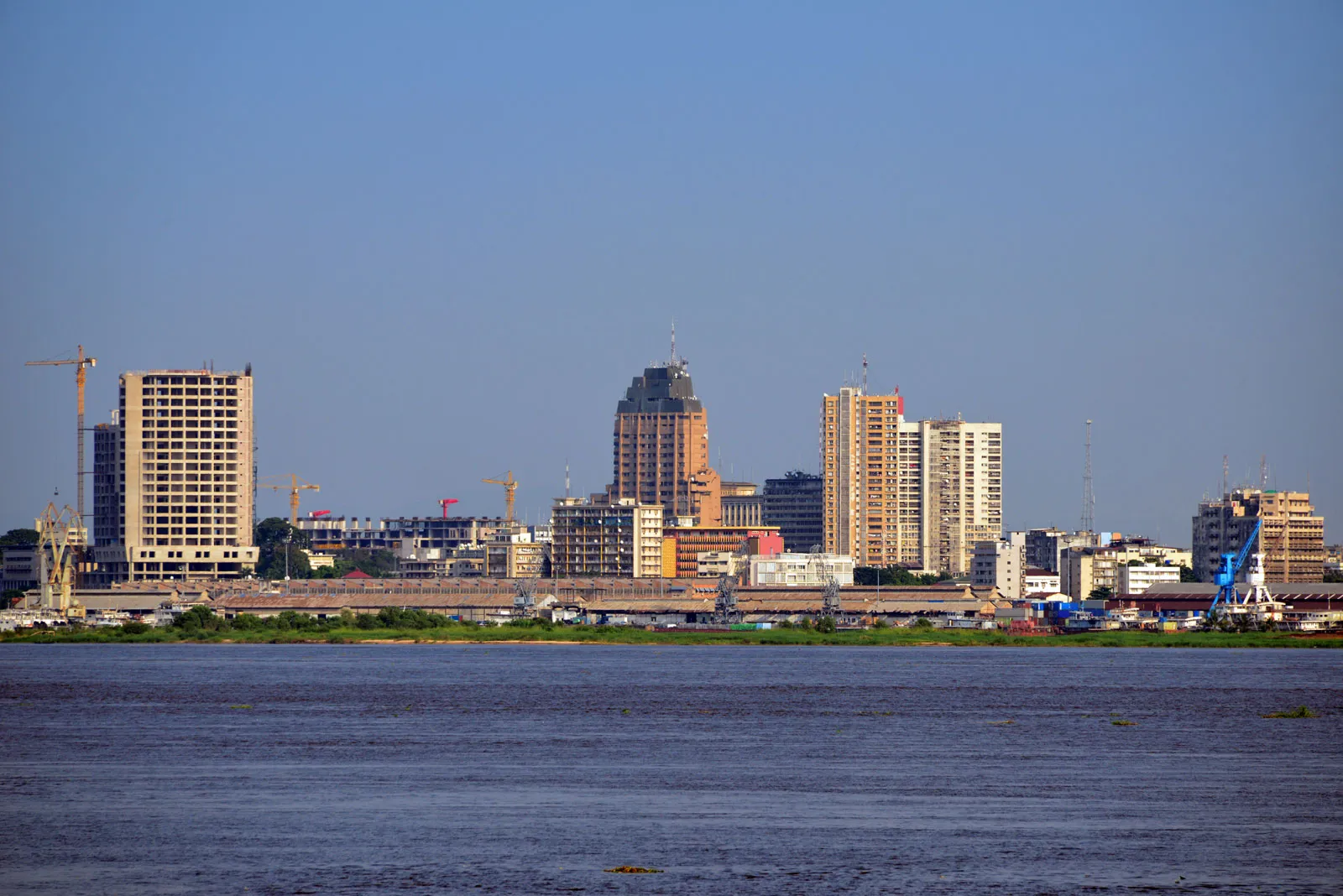
Congo's age structure makes this non-optional. On the order of two-thirds of the population is under 25; the 15–24 cohort was about 22 million in 2025 and is heading toward 26 million by 2030. Industrial mining's formal headcount, even under-counted, is in the low hundreds of thousands. It will not absorb the cohort.
Quality employment therefore has to be designed:
- Technical posts at smelters and plants, with certificates that travel.
- Apprenticeships paid, not "sensitisation."
- Women's access to technical grades and to subcontracting — not only community-liaison posts. Kamoa cadetships that placed local people, about half women in early cohorts, and bursaries weighted toward girls, show it is possible.
- Artisanal miners offered a ladder (formal cooperatives, processing sheds, alternative trades), not only a fence.
- The presidential Debout Jeunes Congolais programme (vocational streams plus a national business-plan competition, first budget envelope in 2026) judged on placements in provinces, not on the launch ceremony.
An industrialisation that leaves most young people in vulnerable informal work has failed its own test, however impressive the anode purity.
8. Constraints that will decide the decade
Power. Binding. Sequence interconnectors and captive renewables now; treat Inga 3 financial close as a national project, not a poster.
Coordination. Precursor zones pull mines, industry, energy, education and finance ministries into one decision. Fragmentation is how SEZs stay empty.
Finance. Processing is capital-intensive and priced for risk. Blended finance, offtake-backed debt, and diaspora syndicates into SMEs are complements, not substitutes for a bankable grid.
Cost curves. Chinese precursor and cell capacity has already crushed prices. African plants must win on integration (ore-to-chemical), green power, and privileged offtake — not on wishing the cost curve away.
Governance. Local-content shells, opaque waivers and unpaid community levies will discredit the industrial narrative faster than any foreign critic.
Peace. Eastern instability taxes the whole brand of Congolese supply. Copperbelt industry cannot be isolated forever from a national security premium.
9. A sequenced policy agenda
Years 1–3
- Keep existing smelters and hydro-met plants at high utilisation; publish mass-balance so ASM mixing is visible.
- Deliver Copperbelt and Kinshasa power increments that plants can contract.
- Operationalise Maluku fully; put Musompo under a single accountable authority with a dated construction plan.
- Enforce subcontracting on capability; open a supplier-upgrading window (quality, working capital, first purchase orders).
- Write processing milestones into lithium licences before first shipment.
Years 3–7
- Commission at least one precursor or advanced-chemical line with regional offtake (DRC–Zambia or buyer-backed).
- Build cable/foil/transformer capacity sufficient to serve domestic grid expansion and corridor demand.
- Turn Lobito station towns into production nodes, not only loading points.
- Scale technical education against actual plant hiring plans.
Years 7–15
- Inga 3 power into mineral chemistry, urban industry and, if competitive, data and manufacturing exports.
- Selective move toward components where cost and skills allow — not a political deadline for cells at any price.
- A measurable shift in the export mix: less concentrate, more metal and chemicals, more manufactured goods.
Metrics that should replace "tonnes mined" in industrial reporting: share of copper exported as anode/cathode; share of cobalt exported as sulphate or precursor rather than hydroxide; megawatts firm to industry; Congolese share of technical grades; SME survival at three years; women in plant and subcontracting roles; processing steps added per new licence.
10. What CC360 Global Advocacy takes from this research
Economic development in the DRC will not be delivered by a single champion project. It will be delivered by a system: electrons, rails, plants, firms, skills and rules that point in the same direction.
International partners who want Congolese minerals for the energy transition should stop financing only the evacuation of those minerals. Offtake that includes a processing step, training seats and a power contribution is development finance. Offtake that only books tonnes is extraction with better branding.
Congolese policy should stay ambitious and become more sequential. Ban what you can already process. Zone what you can already power. Train for the line that will hire next year. Measure value added, not press conferences.
From minerals to industrialisation is not a leap. It is a ladder. The country is on the first rungs. The research task now is to keep it climbing — and to make sure the people standing on those rungs are Congolese.
Companion pieces in this series: Responsible Mineral Supply Chains; Economic Sovereignty; Peace & Stability; Industrialisation; People & Inclusion. CC360 Global Advocacy welcomes data corrections and operational partnerships.
Work with CC360 Global Advocacy
We convene investors, institutions and Congolese partners around responsible, transparent and sovereign resource development.