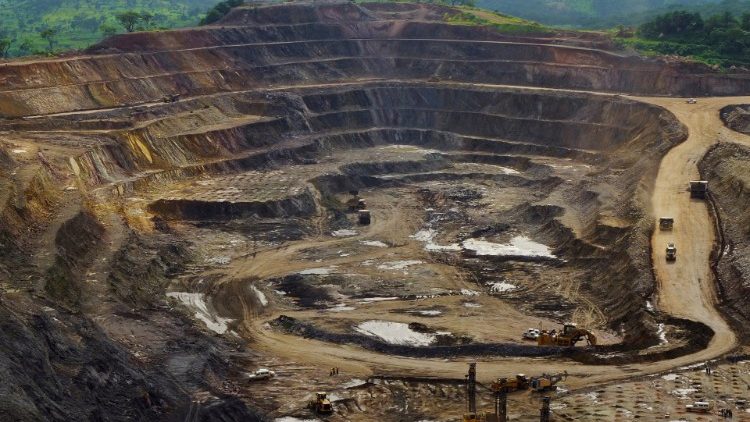
The Democratic Republic of the Congo sits on the minerals that power the twenty-first century. It produces roughly three-quarters of the world's cobalt and more than half of known reserves. It has become the world's second-largest copper producer, with output climbing past 3.4 million tonnes in 2025 — about triple the level of a decade earlier. It is a leading source of tantalum, a major gold and diamond producer, and holds germanium, lithium and manganese that governments now treat as strategic.
Yet GDP per capita remains around $800–1,100, among the lowest of rated sovereigns. More than four-fifths of Congolese live below $3 a day. Only about one in five has electricity. Mining accounts for roughly a quarter of GDP, more than 90 percent of export receipts and around 40 percent of government revenue — and still does not employ the country.
That gap is the argument for economic sovereignty: not a slogan against foreigners, but a claim that Congolese workers, firms, communities and the state should capture a larger share of the value their ground creates.
The Copperbelt can move mountains of ore. The harder task is keeping the next stage of value — metal, chemicals, jobs, taxes — inside the country.
What sovereignty is not
Economic sovereignty is often caricatured as expropriation or a closed door. In the Congolese debate it is closer to a sequence of practical questions:
- Who owns the licence and the equity?
- Who markets the metal, and at what price?
- Is the product leaving as concentrate, hydroxide, cathode or precursor?
- Who supplies the trucks, catering, laboratories and construction?
- Do royalties, taxes and community funds actually arrive?
- Can a young Congolese engineer run the plant in ten years?
A country can host world-class mines and still be a price-taker in a chain designed elsewhere. That is the DRC's default position. Cobalt leaves mostly as hydroxide. Refined metal, battery chemicals and cells are made in China and, increasingly, Indonesia. Chinese companies control a large majority of Congolese cobalt output; Chinese refiners still process most of the world's cobalt.
The paradox is sharp: Kinshasa can move the global cobalt price, as the 2025–26 restrictions showed, and still capture only a sliver of the battery pack's final value.
The resource curse, restated for the battery age
The classic diagnosis still fits. Extractive growth is capital-intensive. Formal job creation lags GDP. Illicit flows and weak public companies leak rent. Conflict in the east turns coltan and gold into war finance: UN experts have documented armed groups taxing production at sites such as Rubaya, a major coltan source.
The new twist is demand. Copper and cobalt are no longer only industrial metals. They are inputs to electric vehicles, grids, data centres and defence electronics. That raises the political price of remaining a quarry. President Félix Tshisekedi has framed domestic processing as a pillar of economic sovereignty, arguing that partnerships must be judged by fairness and local value, not only by tonnes shipped.
The extractive sector's weight makes the strategy unavoidable and dangerous at once. When mining sneezes, the budget and the franc catch cold. Sovereignty that only squeezes the same two commodities is still dependence, just with better slogans.
The legal architecture: the 2018 Mining Code and what followed
The 2018 revision of the Mining Code was the first systematic attempt in a generation to rewrite the bargain. It raised the state's free-carried equity from 5 to 10 percent. It lifted royalties — 3.5 percent on copper, 10 percent on "strategic" substances including cobalt. It required a 0.3 percent contribution of turnover to community development. It reserved a slice of share capital for Congolese nationals and employees. It already required refining plans and restricted raw-ore exports.
Implementation lagged. Employee and national shareholding provisions were deferred for years; a July 2026 deadline forced operators including Glencore, CMOC, Ivanhoe and Huayou back to the table. Who actually buys those shares, at what valuation, and whether they become real ownership or a paper obligation, will decide if "Congolese participation" is ownership or optics.
Gécamines, the historic state miner, is the other lever. After years of living on dividends and royalties from joint ventures, it has pushed into direct marketing of the metal corresponding to its stakes — including a claimed right to lift about 20 percent of Tenke Fungurume's copper, in line with its equity. Similar marketing rights have been written into revised arrangements at Sicomines. That does not make Gécamines a world-class trader overnight. It does give Kinshasa a physical handle on tonnes, which is more useful in a tight market than a dividend that arrives late.
The 2008 Sicomines "minerals-for-infrastructure" deal — Chinese construction in exchange for copper and cobalt — remains the most controversial monument of the last era. A 2024 revision raised the infrastructure envelope toward $7 billion, introduced a 1.2 percent royalty and a profit-sharing trigger when copper prices are high. Critics still see tax holidays running to 2040 as too generous. Supporters see the only capital that was actually on offer. Both can be true.
From price-taker to quota-setter
The most dramatic shift came in 2025–26, when Kinshasa stopped treating cobalt as a volume to maximise and started treating it as a market to manage.
A multi-month export ban beginning in February 2025 answered a price collapse driven by oversupply — much of it from CMOC's Kisanfu ramp-up. In October 2025 the ban gave way to quotas: 96,600 tonnes a year for 2026 and 2027, well under half of 2024 output, with a 10 percent strategic reserve held by the regulator ARECOMS. Unused quotas can now be clawed back into that reserve and steered toward national-interest projects, including local processing. Cobalt prices recovered sharply from early-2025 lows. Congolese officials have projected a large fiscal gain versus a no-intervention case.
A June 2026 joint ministerial order then prohibited exports of copper and cobalt concentrates, with limited one-year waivers, on the explicit ground that operators should sell higher-value products.
This is OPEC logic applied to a by-product metal. It has limits. Most Congolese cobalt is produced alongside copper; miners cannot simply turn cobalt off. Quotas that outrun domestic refining capacity create stockpiles, not factories. And Indonesia's nickel-associated cobalt is a growing alternative. Market power is real. It is not infinite.
Moving up the chain — the missing factories
Value in batteries does not sit in the pit. It sits in refining, precursor chemicals (pCAM), cathode active material, cells and packs. The DRC has climbed the first step in copper: Kamoa-Kakula's on-site direct-to-blister smelter poured its first anodes in December 2025, the largest such plant in Africa. That is a genuine shift from concentrate to metal.
Cobalt is harder. Exporting hydroxide is better than exporting raw ore; it is still an intermediate. Battery precursors need nickel and manganese as well as cobalt, reliable high-voltage power, reagents, water treatment and skills. Those are scarce.
Indonesia is the comparison everyone reaches for. After banning nickel ore exports, it attracted Chinese smelters and HPAL plants, captured a dominant share of mined nickel and a rising share of battery-grade intermediates. The conditions that made that possible — cheap (if dirty) power, coastal industrial parks, aligned Chinese capital and technology, and a state that could enforce the ban — do not map cleanly onto the DRC. Analysts who have compared the two countries note that the Congo has not yet moved past crude refining at scale, in part because of electricity, logistics, governance and human-rights risk.
Copying the ban without copying the industrial park is how countries end up with unsold concentrate and angry investors.
The binding constraint is energy. Inga's theoretical potential is enormous — on the order of 40 gigawatts — while national access hovers near 21 percent. A precursor plant that cannot keep the autoclaves running is a monument. The National Energy Pact's target of much higher access by 2030 is therefore not a social add-on to mining policy. It is mining policy.
Logistics is the second constraint. The Lobito Corridor, linking the Copperbelt to Angola's Atlantic coast with Western finance behind it, is an attempt to break the historic choke of southward rail and Dar es Salaam trucks. A US–DRC strategic partnership text even contemplates steering a share of state-marketed copper, zinc and cobalt onto that route. Corridors move tonnes. They do not, by themselves, create chemical plants.
Participation below the boardroom
Sovereignty that stops at Gécamines' offtake rights will not be felt in Kolwezi or Kolwezi's satellite camps.
Local content. Rules that push subcontracting, catering, transport and construction toward Congolese firms can multiply jobs faster than a refinery will. They fail when "local" companies are brass-plate vehicles for the same foreign contractors, or when standards are used as a shakedown.
Community development. The 0.3 percent levy has, according to the mines ministry, channelled hundreds of millions of dollars since 2019 into schools, clinics, water and roads — 349 million collected from 44 companies, with hundreds of projects approved. That is not trivial. It is also a small fraction of mine turnover, and delivery quality varies.
Artisanal miners. ASM still supplies a material share of DRC cobalt — commonly estimated at 15–30 percent of national output — and employs far more people than the industrial pits. Entreprise Générale du Cobalt was created to bring artisanal cobalt into a traceable, legal channel; it reported its first thousand tonnes of traceable artisanal cobalt in late 2025 and has explored offtake toward Western markets via Lobito. Formalisation that pays a living price is sovereignty for the poorest link in the chain. Formalisation that is only a monopoly on paper is not.
Skills. A population that is roughly two-thirds under 25 cannot be asked to wait for a precursor plant that never opens. Mining schools, technician programmes and mandatory skills transfer in joint-venture contracts are less photogenic than an export ban. They decide whether the plant, if built, is staffed by Congolese.
The great-power market for Congolese allegiance
Beijing already sits inside the mines. Washington has spent 2025–26 trying to write itself back in: a strategic partnership that talks of local value addition, a DFC minerals-marketing arrangement with Gécamines, backing for Lobito, and a shortlist of state assets — manganese, copper-cobalt, gold, lithium — offered to US investors.
For Kinshasa the opportunity is leverage: more than one buyer, more than one financier, more than one route to the sea. The risk is swapping one enclave for another — Western offtake that still leaves refining in someone else's industrial park, or "peace-and-minerals" diplomacy that treats eastern security as a side payment for access.
Economic sovereignty is not alignment with Washington or Beijing. It is the capacity to say yes to capital on terms that leave plants, skills and tax in the Congo, and to say no when they do not.
A practical agenda
If the test is greater Congolese participation in value, the next decade should be judged against a short list.
- Process what can actually be processed. Enforce concentrate restrictions where smelting and hydrometallurgy already exist or can be financed. Sequence battery-chemical ambitions behind power and reagents, not ahead of them. Special economic zones with dedicated generation beat nationwide bans that no one can comply with.
- Make Gécamines a commercial actor, not only a political one. Marketing rights are useful if the metal is sold transparently, at observable prices, with audited proceeds. They are a new leakage channel if they are not.
- Collect the existing code before writing a harsher one. Super-profit taxes, royalties and community levies that are litigated for years do less than a boring, predictable take that is actually paid. Contract transparency is part of sovereignty: citizens cannot defend a bargain they cannot see.
- Broaden the productive base. Agriculture, timber processing and hydro-industrialisation are how a 100-million-person country absorbs its youth. A copper boom that leaves 80 percent poor is not sovereignty. It is a larger quarry.
- Secure the east without selling the subsurface. No industrial policy survives if coltan and gold remain a war chest. Traceability and responsible-sourcing rules only work if the state, not the checkpoint, is the tax authority.
- Measure success in jobs and skills, not only in prices. A cobalt price of $56,000 a tonne is a win for the treasury. A Congolese-owned laboratory that certifies export grades, a local contractor that builds the next tailings dam, and a technician who can restart a solvent-extraction circuit are wins that compound.
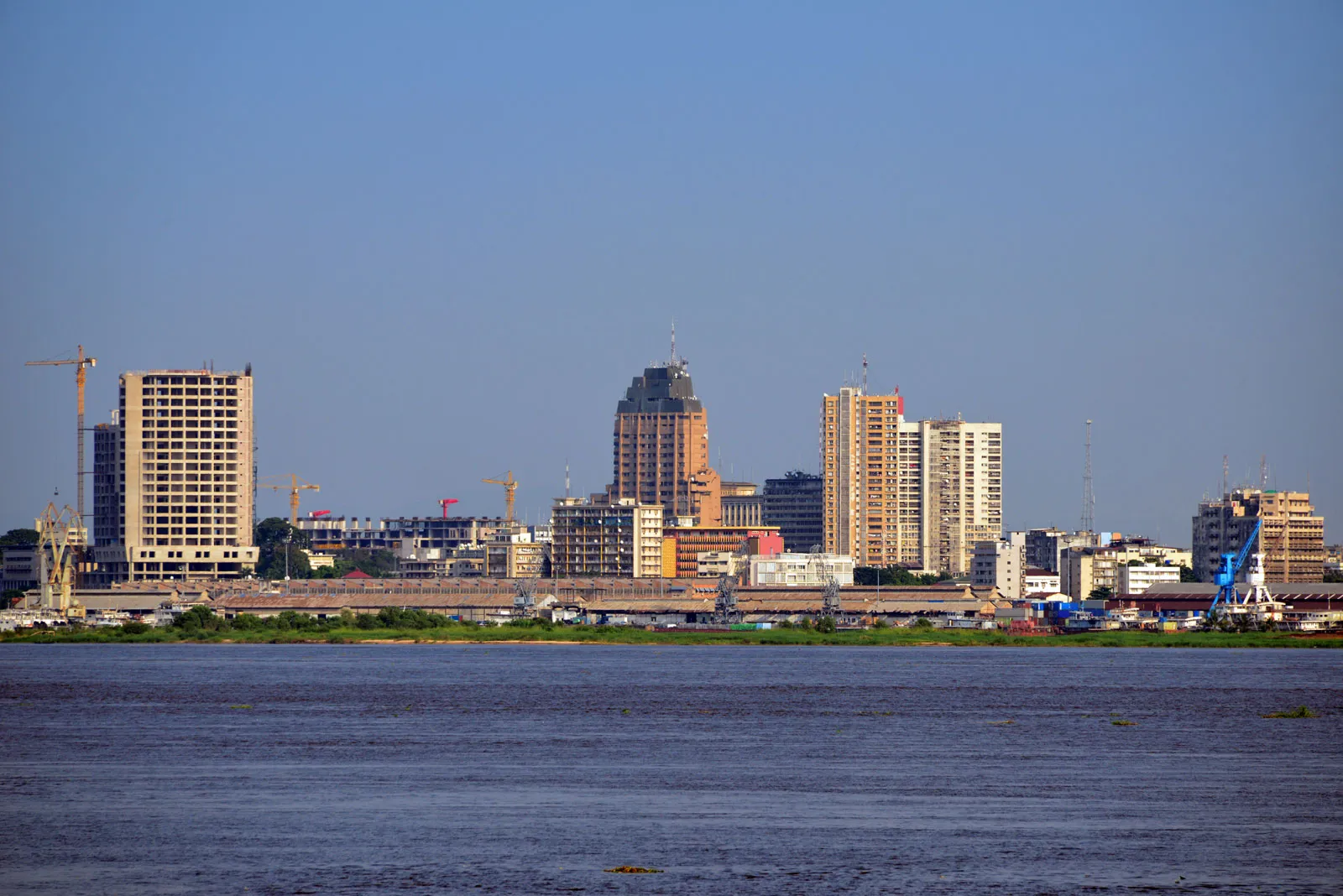
Kinshasa's skyline faces the river that could power the factories the mines still lack. Energy, not another communiqué, is the bridge from ore to industry.
The standard that matters
The Congo does not need to own every mine. It needs to own a growing share of what those mines become.
That means equity that is real, metal that is marketed in Congolese interest, processing that matches the power grid, artisanal miners inside the law rather than outside it, and a state that can collect and spend rent without losing it to conflict or capture.
The world will keep needing Congolese copper and cobalt. The open question is whether the next wave of demand builds a Congolese middle class and a Congolese chemical industry — or merely a larger hole in Katanga and a larger line item on someone else's battery bill. Economic sovereignty is the decision to treat that question as the point of mining policy, not as a footnote to the tonne count.
Work with CC360 Global Advocacy
We convene investors, institutions and Congolese partners around responsible, transparent and sovereign resource development.